Originally published on June 30, 2026
Since retooling the demo/opening area of Sad Land late last year, it has been my intention to submit the game to 2026’s BostonFIG (Boston Festival of Indie Games) showcase. This is mostly so I can keep myself further accountable with a firm deadline and to present something playable publicly for people who are unfamiliar with the project.
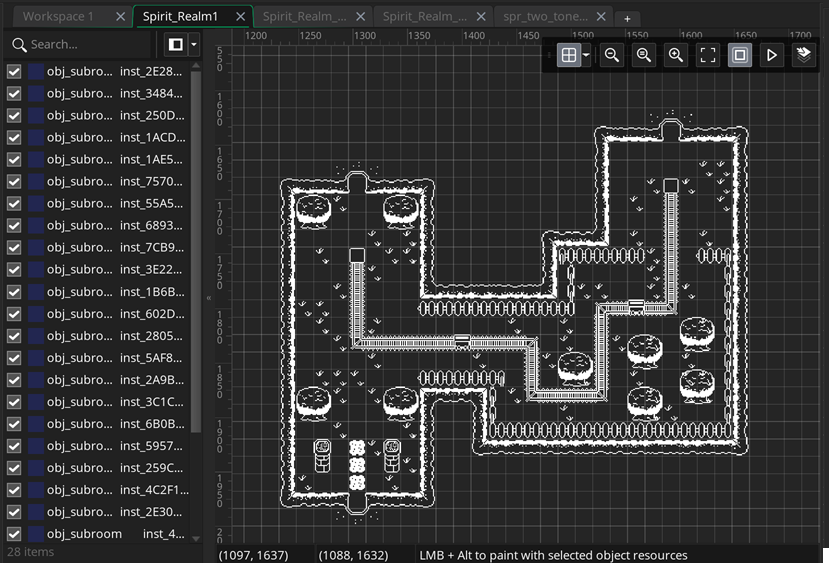
This year BostonFIG shifted their event from December to early October, which also shifted their submission deadline from mid-October to mid-June. I realized this changeup in dates just in time to pull together a formal submission. I dropped the work I had been doing and refocused all my efforts on 1) getting the demo to a coherent and semi-polished state that I would be comfortable with a stranger picking up and playing and 2) producing a 5-minute video showing gameplay, outlining the design philosophy for the project, and explaining where I plan to take the game in the future.
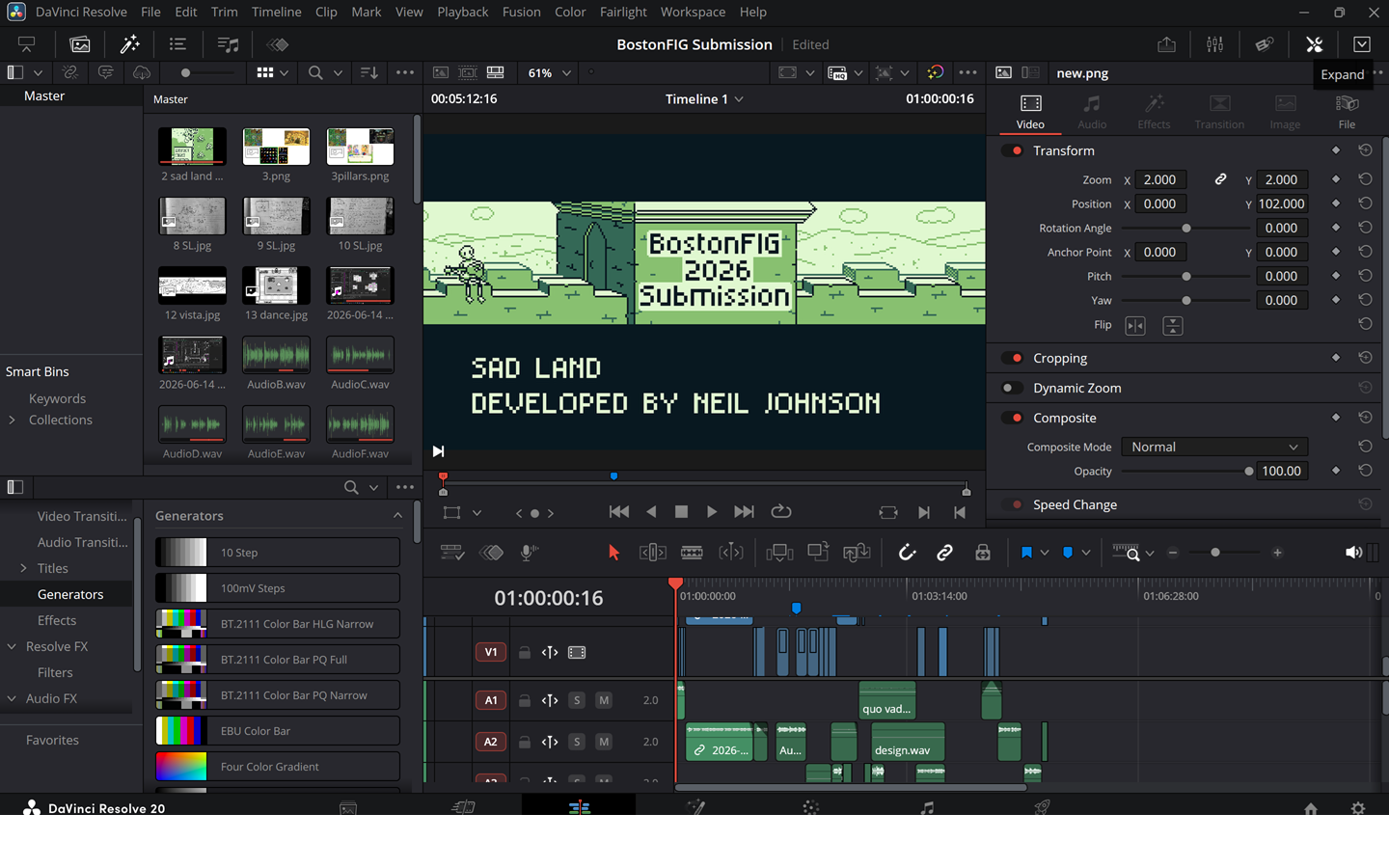
By the end of my long weekend working on the game and video, I was relatively happy with what I had cobbled together and sent it off just an hour before the midnight deadline. I can’t say that it is fun to be in that focused state of cramming for a deadline, but I can say that it’s a real relief when you’re on the other side. And beyond just getting the submission completed and submitted, I also got fully acclimated to the open-source video editing program Da Vinci Resolve, something I’ve been hoping to get to at some point but have been avoiding.
By the end of my long weekend working on the game and video, I was relatively happy with what I had cobbled together and sent it off just an hour before the midnight deadline. I can’t say that it is fun to be in that focused state of cramming for a deadline, but I can say that it’s a real relief when you’re on the other side. And beyond just getting the submission completed and submitted, I also got fully acclimated to the open-source video editing program Da Vinci Resolve, something I’ve been hoping to get to at some point but have been avoiding.
I’ve found the most consistent success in learning new skills is by picking a project and learning through doing. If I add a brick-wall deadline to that project (preferably set by some sort of outside authority), the chance that I’ll actually finish goes up astronomically.
_poster.jpg)
This month I went to see the film Backrooms with some friends at the Somerville Theater and had a great time. After watching the film, I started listening to interviews with the director to get a better understanding of him and his creative process. This type of project-based learning that I experienced with my video editing program is how Kane Parsons, the 21-year-old director behind this year’s hit horror film Backrooms, got his start as a filmmaker. In a recent interview with the Toronto Independent Film Festival (TIFF) he explains the start of his filmmaking journey was by first picking up the 3D imaging program Blender…
I got into Blender not immediately for film production. I got into it in the beginning of 2020. I was 14. I was just trying to rip Half Life 2 assets. I was making art in preparation for Half Life Alyx coming out. And once Alyx came out, I tried to rip assets from that and make little scenes.
I’ll watch tutorials but then as soon as I think I roughly have an idea of how to guerrilla-style go get what I want in Blender, I’ll go as far as I can and then if I run into a wall I’ll search online for an answer. So I think it’s that project-based learning I was using quite a bit. And then of course it helps that there’s a million answers to anything you’ll run into online from people who are already established creators themselves putting out resources online.
*this quote slightly edited for clarity
I’ll watch tutorials but then as soon as I think I roughly have an idea of how to guerrilla-style go get what I want in Blender, I’ll go as far as I can and then if I run into a wall I’ll search online for an answer. So I think it’s that project-based learning I was using quite a bit. And then of course it helps that there’s a million answers to anything you’ll run into online from people who are already established creators themselves putting out resources online.
*this quote slightly edited for clarity
Backrooms isn’t just any horror film and Parsons isn’t just any film director. For a full breakdown of what the backrooms are as a cultural internet phenomenon, I recommend the episode the backrooms: a blurry photo that changed the internet from Jamie Loftus’ Sixteenth Minute (of Fame) podcast. In short, the concept of the backrooms is a sort of internet-age myth/urban legend/meme of an eerie pocket dimension of endless carpeted yellow rooms lit by florescent overhead lights. In 2003, someone took a photo of an empty showroom in Oshkosh, Wisconsin…
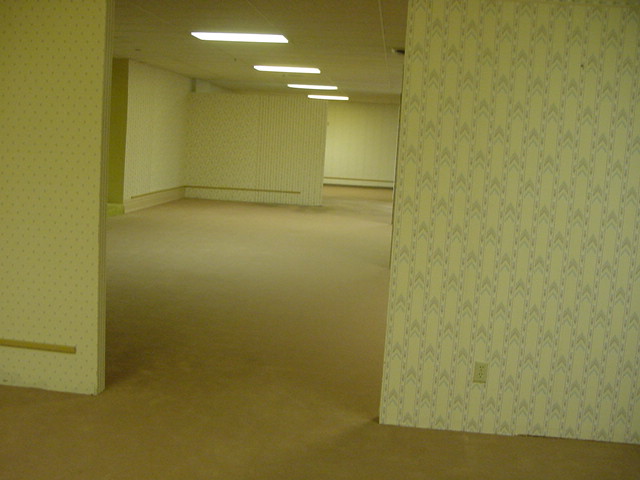
…and two decades later someone reposts this image alongside a creepy story, recontextualizing the original photo and capturing the imagination of a certain type of person on the internet. It’s strangely familiar yet unquestionably odd. Many artists created derivative work based on the aesthetic, including a young video-game loving kid from Petaluma, California, named Kane Parsons. On January 7, 2022, Parsons uploaded his first short film based on the backrooms lore called The Backrooms (Found Footage).
The 9-minute short film, which at the time of writing this has nearly 89 million views, is an ambitious and well-paced horror film about a young guy thrust into the world of the backrooms with nothing but a hand-held camcorder and a desire to get out. The entire backrooms areas are rendered in 3D but are made more believable by the realistic camera shake and the VHS resolution of the film itself. Parsons continued posting films in the series, exploring his own interpretation of the concept and sharpening his abilities as a director along the way. Before watching any of his work, it had surprised me that a studio would hand over $20 million dollars to someone so young and inexperienced in legacy media to direct a major release starring Chiwetel Ejiofor and Renate Reinsve, but after watching a few of his shorts, I get it. He has a very clear vision and a firm grasp of what makes the subject matter so engaging.
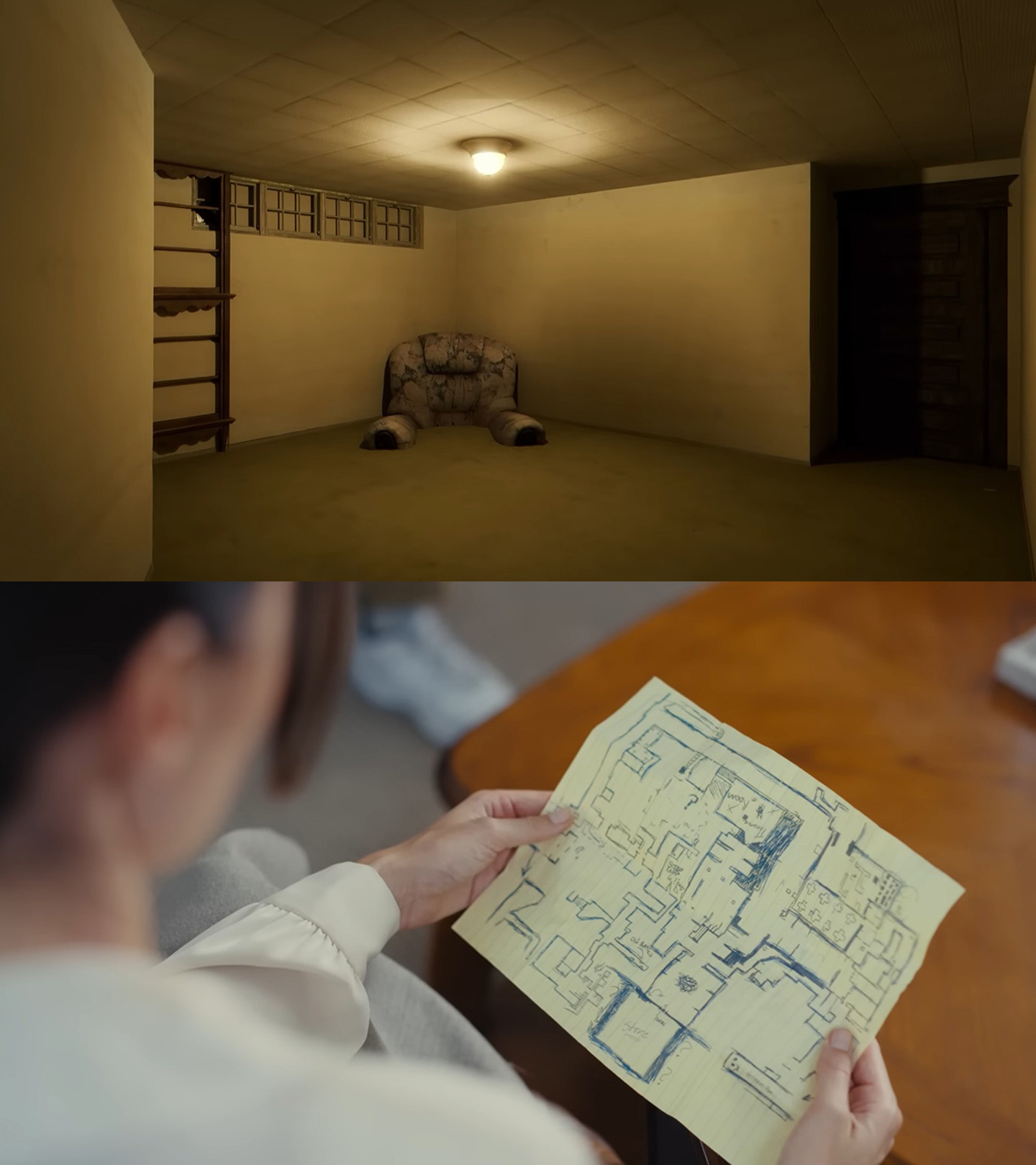
The reason I’m bringing this film up at all is that I could sense a deep connection between Parson’s Backrooms and video game level design. The three main aspects of this that I can point to are 1) objects that are either clipping through a wall (a solid object impossibly shifting through another solid object), 2) the vast and endless rooms of all different shapes and sizes, and 3) the identically repeating objects that sometimes appear squashed or stretched in unnatural ways. The backrooms look like a custom DOOM map made of textures from a 1970s Sears catalog.
The reason I’m bringing this film up at all is that I could sense a deep connection between Parson’s Backrooms and video game level design. The three main aspects of this that I can point to are 1) objects that are either clipping through a wall (a solid object impossibly shifting through another solid object), 2) the vast and endless rooms of all different shapes and sizes, and 3) the identically repeating objects that sometimes appear squashed or stretched in unnatural ways. The backrooms look like a custom DOOM map made of textures from a 1970s Sears catalog.
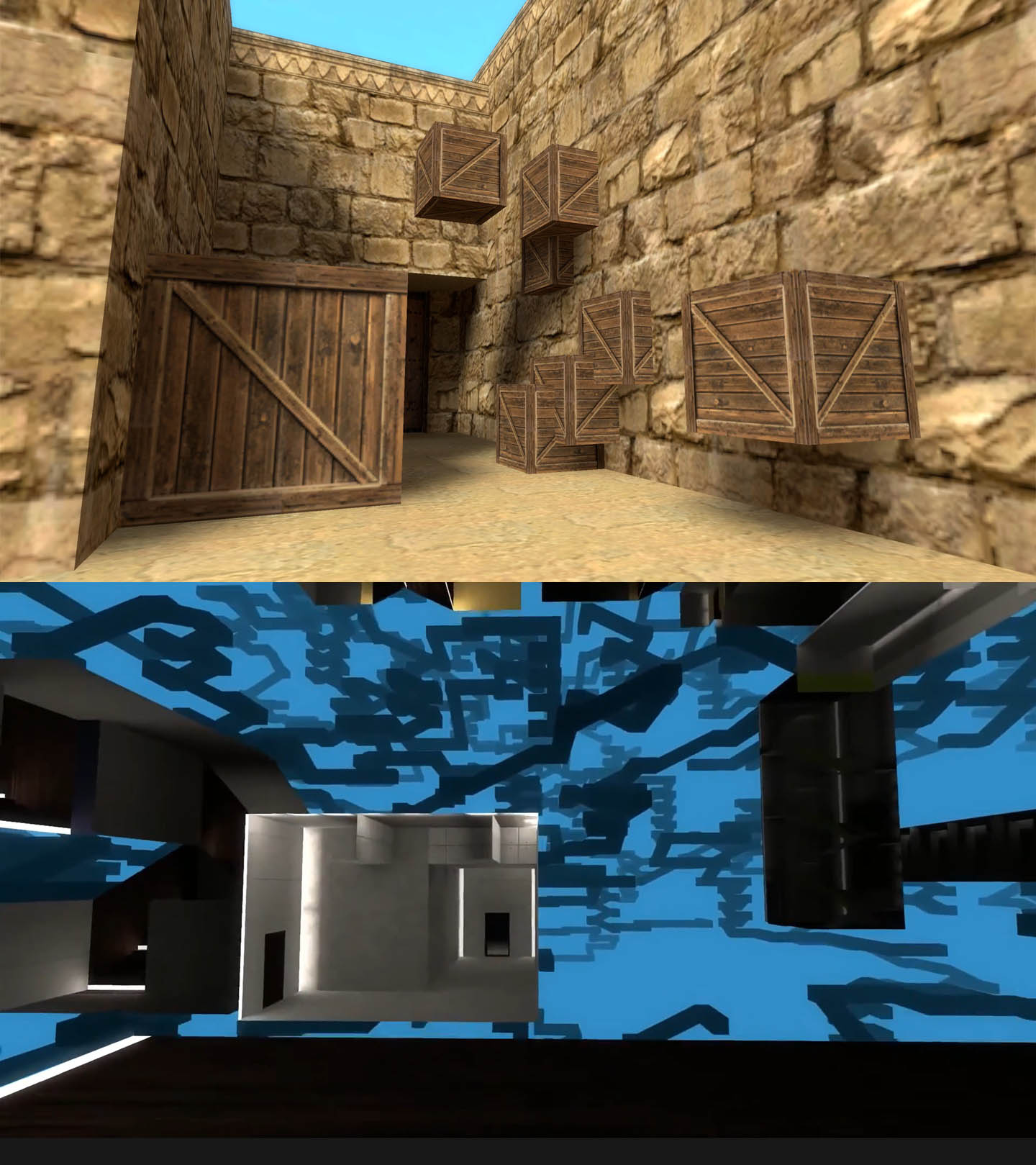
The image above highlights a chair sunk deep within a carpet and a hand-drawn map of the backrooms that looks more like a doodle made during a 3-hour math lecture than anything else. And below you will find two images taken from Davey Wreden’s The Beginner's Guide, a short narrative game created using Valve’s Source engine.
I chose this as an example mostly to illustrate the fact that sometimes video game environments are created not with an eye for perfect realism but to present an impossible reality to explore. Here we see boxes floating in midair and clipping through a stone wall and miles of interconnected tunnels and staircases floating in a void. It’s worth noting here that The Beginner's Guide is, within the fiction of the game, set in a series of sometimes incomplete games. Which is to say that the features it shares with the backrooms are those found more often in experimental or abandoned player-created levels than finished and polished games.
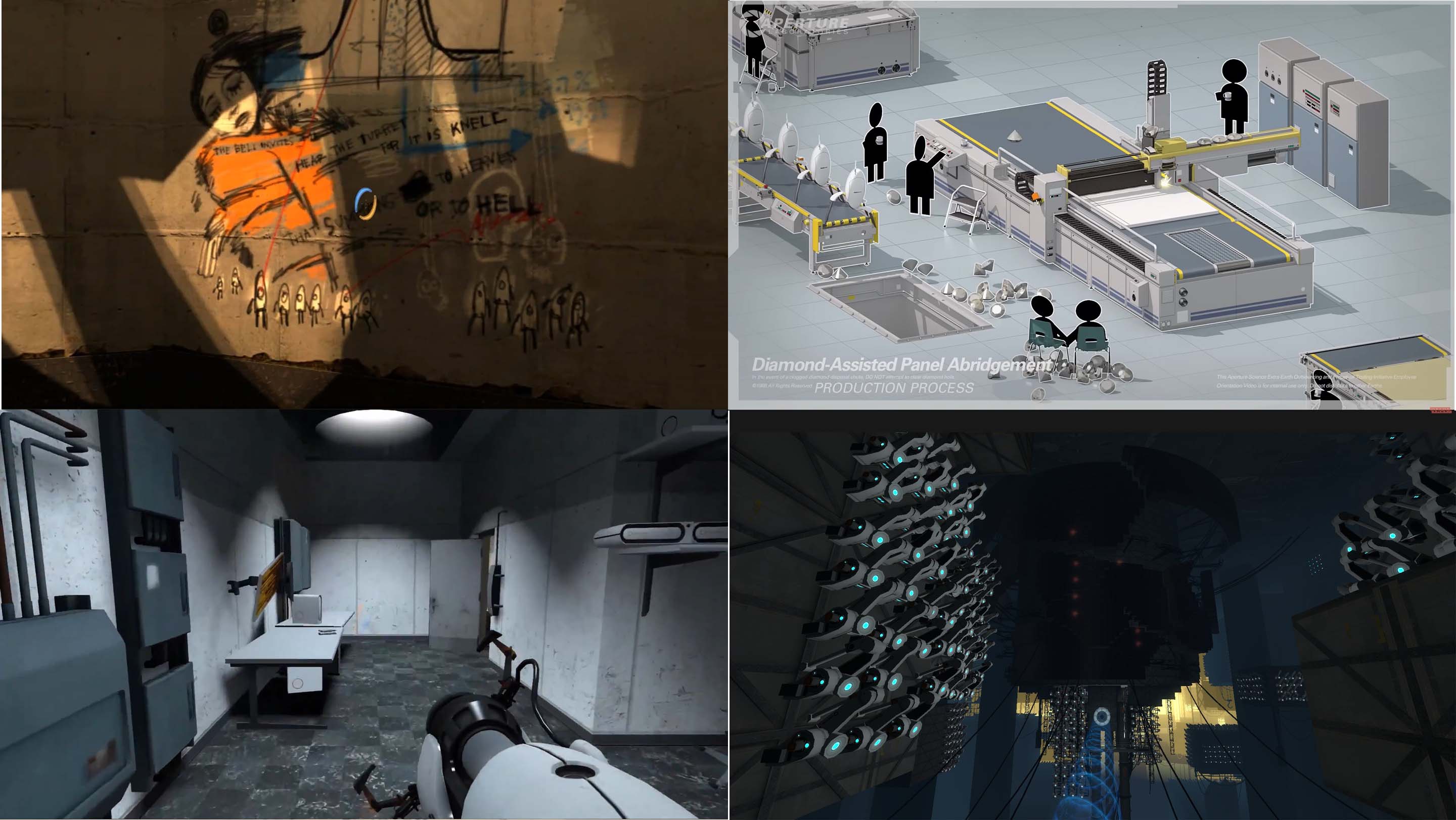
In a Letterboxd video about Kane Parsons’ influences, instead of naming a film, he cites Valve’s Portal series:
Portal would be the earliest influence; it’s the easiest one I can pin down. It’s the strongest influence over, like, anything I’ve done in my entire life probably.
It’s vast and in a lot of ways it is an internal indoors and it goes on in all directions and it’s absurd in its scope.
It’s vast and in a lot of ways it is an internal indoors and it goes on in all directions and it’s absurd in its scope.
Below is a series of shots from the Backrooms web series to help illustrate this aesthetic connection.
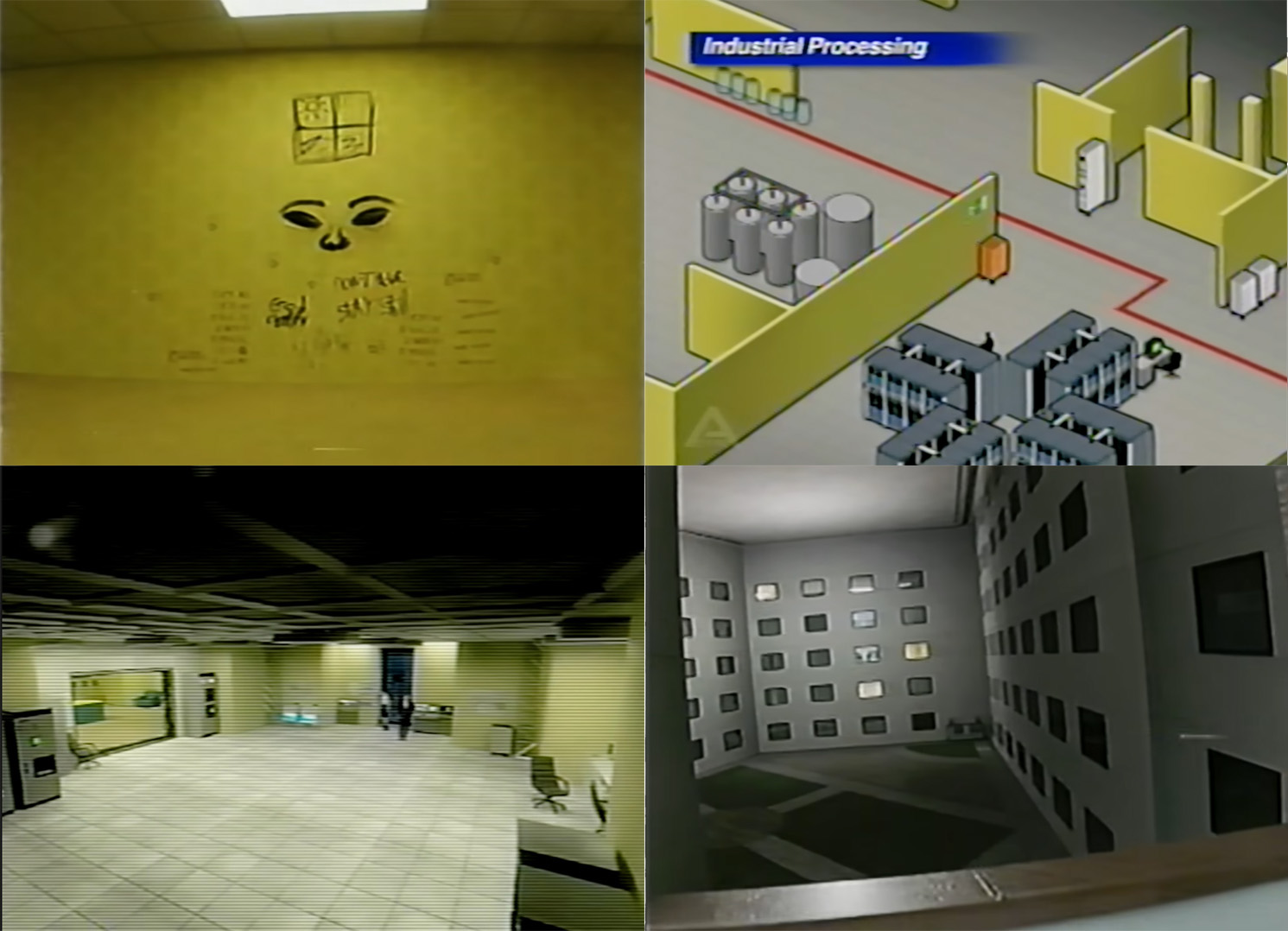
Half-life, another Valve series mentioned earlier, takes place in the same fictional universe as Portal and shares many aesthetic choices – large interiors, sterile science labs, etc.
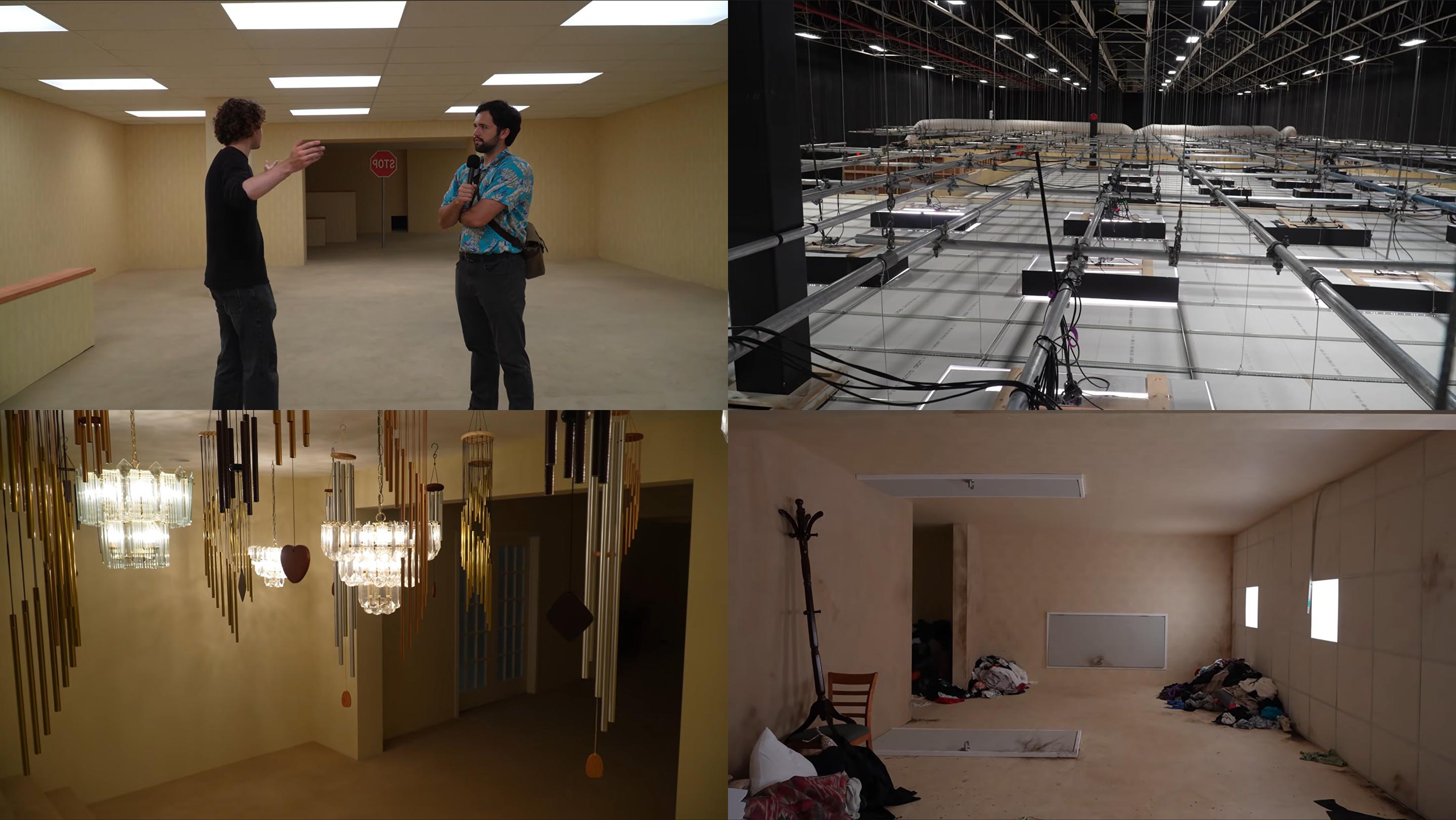
Shots of the set taken from Wendigoon’s video Behind the Backrooms - An On Set Interview w/ Kane Parsons
But the world presented in the film Backrooms is still a film with real human actors in many physical sets. Parsons was integral in helping craft the world we see, handing off his own meticulously crafted digital sets to the art department to use as reference for the real set they constructed on a sound stage. So there are physical sets alongside completely digitally rendered sets. In an interview with patrick 2masso, the film’s cinematographer Jeremy Cox explains that the he saw the VHS camcorder footage used in some sections was something he saw as the “technical crux of the film.” By using a lower video resolution, the feature film seamlessly blends the real sets with the digital sets without losing any suspension of disbelief.
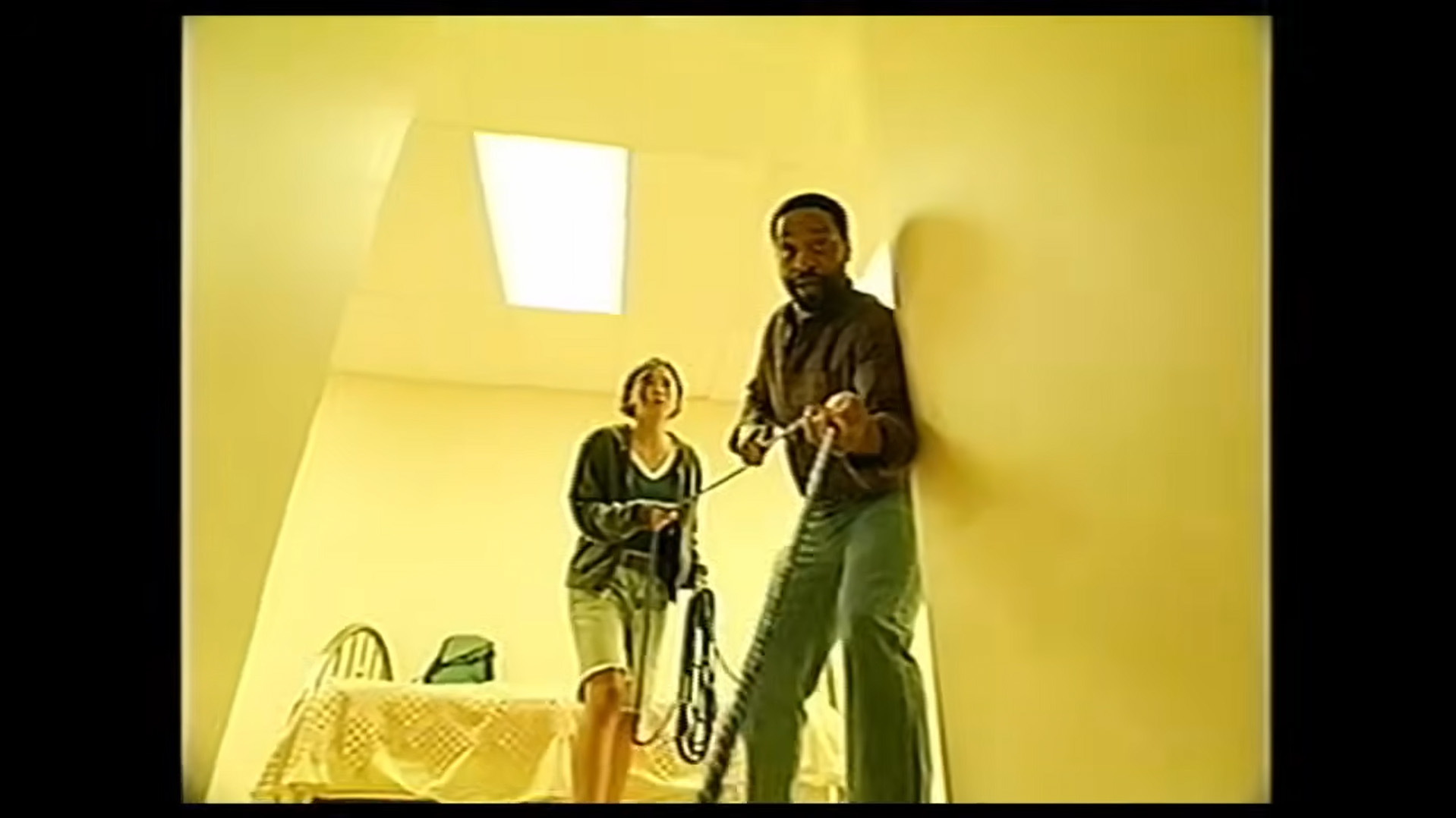
This type of footage does something else for the audience as well. Grainy footage can be more unnerving than a perfect high-resolution video. The Blair Witch Project, for example, works so well because of how it looks and how it’s presented. This concept was explored by video-essayist Harry Brewis (aka HBomberguy) in his video The Power Of VHS:
Even in visual mediums supposedly all about showing people things, for achieving some effects, often less is more. The human mind is incredibly good at scaring itself and sometimes not being shown what you’re supposed to be scared of is the worst thing. Confusion settles in. Fear of what could be there. What could happen fills your head and your imagination with it’s own particular fears gets to substitute those over whatever’s actually there.
A lower-resolution format can increase the emotional impact of a scene. Horror and suspense have the chance to strike people like it never had before. No wonder films like [Alien] did well. In some ways, modern high-resolution versions of these films can’t quite capture that particular magic.
Computer graphics animation were largely lacking in the 80’s, 90’s, and even the early 2000s. Nothing really quite looked right – things didn’t feel like they were really there. Texture and displacement mapping wasn’t up to snuff, and you had smooth- looking weird stuff in your frame. It wasn’t great. But even mediocre CGI can blend right in on tape.
A lower-resolution format can increase the emotional impact of a scene. Horror and suspense have the chance to strike people like it never had before. No wonder films like [Alien] did well. In some ways, modern high-resolution versions of these films can’t quite capture that particular magic.
Computer graphics animation were largely lacking in the 80’s, 90’s, and even the early 2000s. Nothing really quite looked right – things didn’t feel like they were really there. Texture and displacement mapping wasn’t up to snuff, and you had smooth- looking weird stuff in your frame. It wasn’t great. But even mediocre CGI can blend right in on tape.
This ability to blend the real in the digital sets is just one way this lower-budget film is able to punch above its weight. There’s so much more I could delve into and so much I glossed over (liminal horror as its own subgenre or how One Hour Photo was another aesthetic inspiration) but I only have so much time to write these. Anyway, at a time when the film landscape is so uncertain, it is nice to see such a young and fresh voice succeed the way Parson’s has.
For the month of July, I plan to get back on track polishing the demo. No better way to beat the heat than working in my air-conditioned office.
Sincerely,
Neil
For the month of July, I plan to get back on track polishing the demo. No better way to beat the heat than working in my air-conditioned office.
Sincerely,
Neil