Originally published on October 31, 2025
At the beginning of the month, I took a few days off work, rented a motel room, and committed myself to three full days of uninterrupted game development. On any given week, most of my game development time is done on the weekends with a few hours here and there on weekday morning or evenings. Although these little pockets of time are important to consistently pick away at the game, it doesn’t really allow for a broader examination of my progress or any large-scale review of the shape of the game as it’s coming together. Taking this time was incredibly valuable and I’ll be devoting this month’s newsletter to explore my key takeaways.
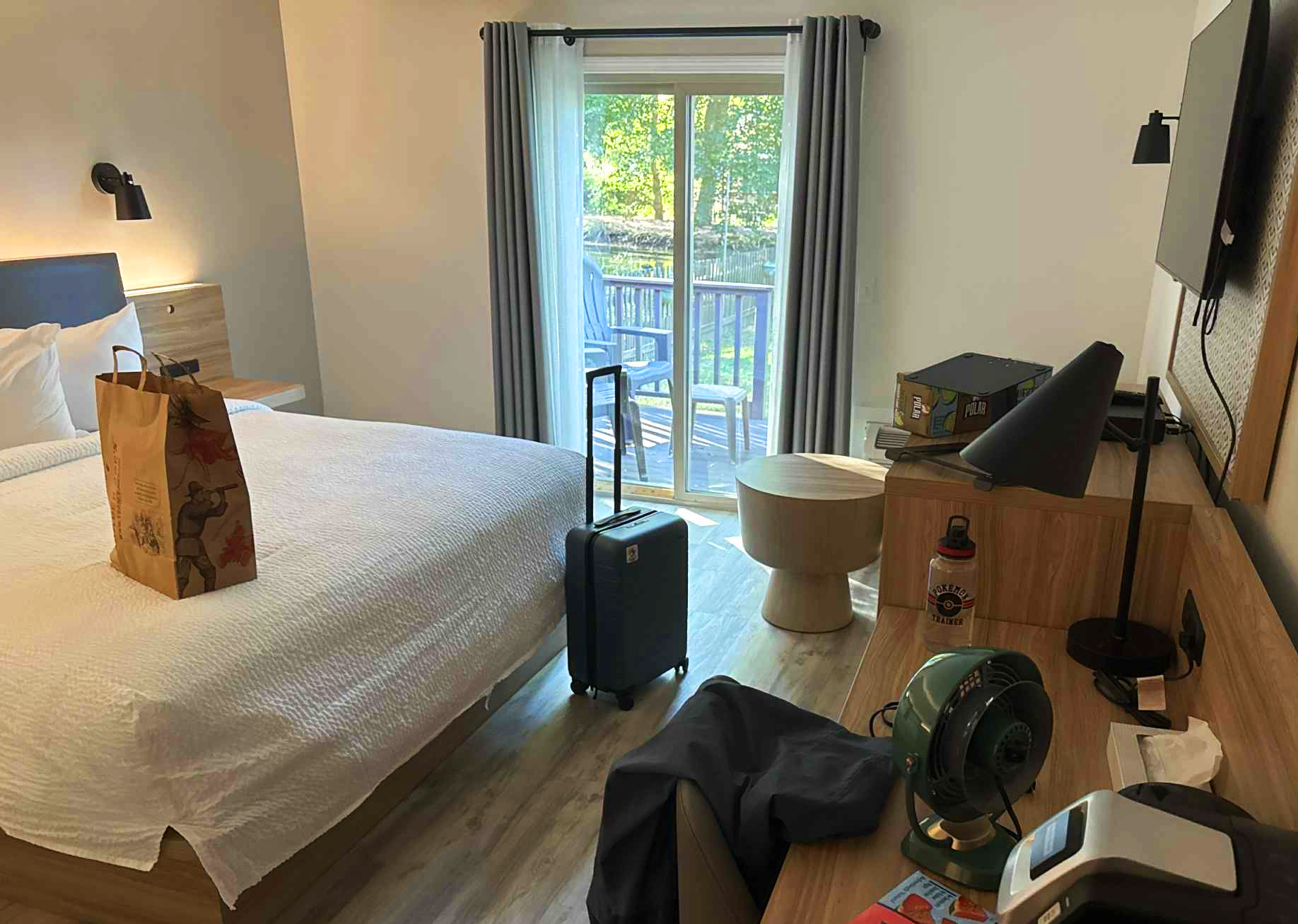
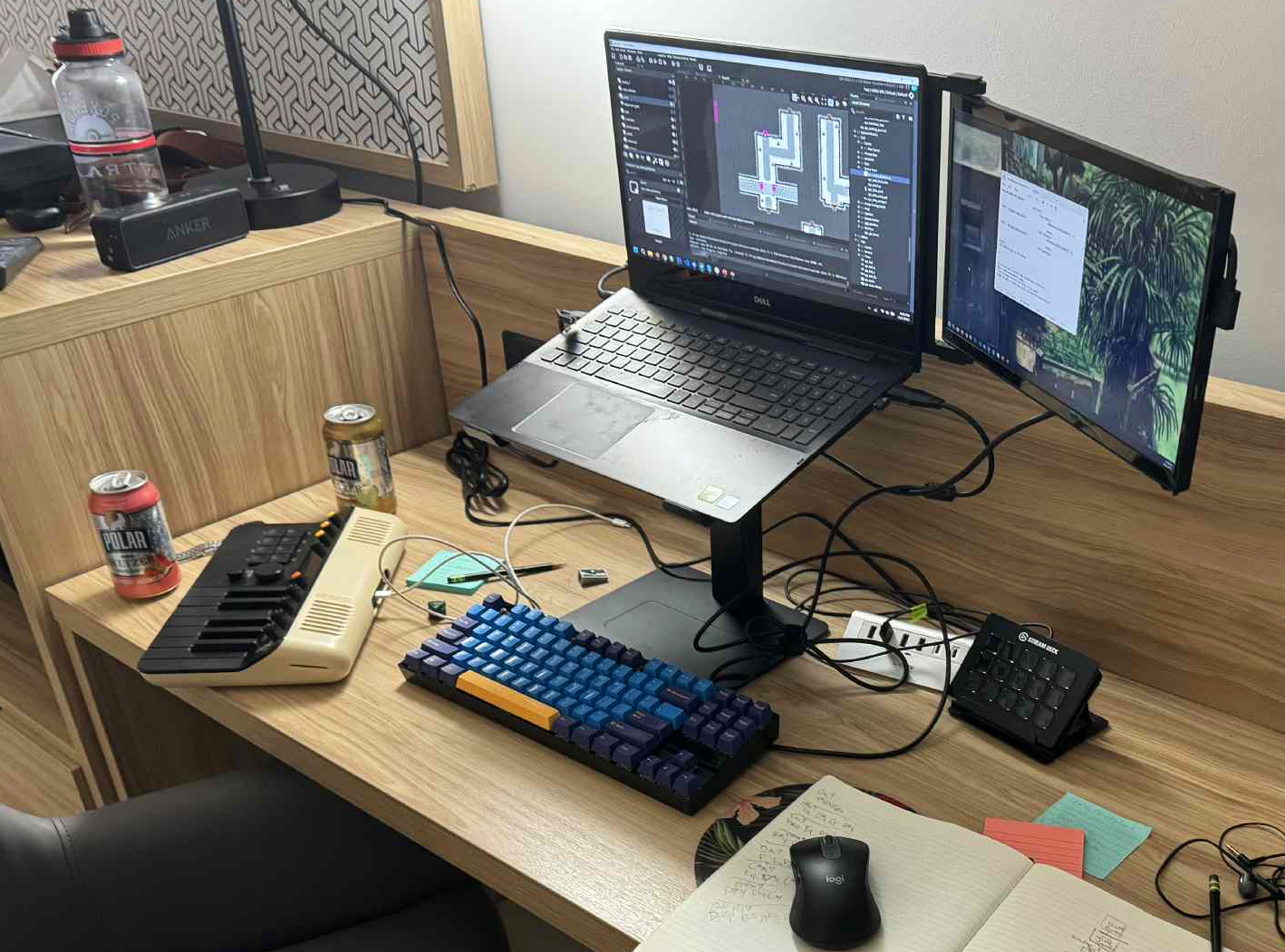
On the afternoon of October 2nd, I drove from Boston down to Sandwich, MA, to stay at an affordable motel away from any large commercial areas. I stopped at Trader Joe’s on my way to pick up some extra snacks and a few frozen dinners to tide me over. After setting up my computer and settling into my little rented room, I got to work and didn’t stop until around 10 PM. The minimalist setup without any immediate distractions reminded me of my college dorm room: an easy place to focus but a little isolating.
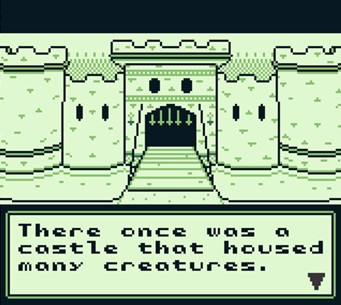
A screenshot from an earlier build of the game
One aspect of the game that I’ve neglected to work on for a while is the opening cutscene. It’s common for games to begin with a series of still images paired with text to introduce the setting/characters, set the tone, and maybe present the game’s stakes. Going into my long work weekend, I was convinced that this is the part of the game I wanted to focus on and complete if nothing else.
The week before, I had walked one of my friends through the current build of the game, showing him the characters and some bespoke interactions. While he did comment that the game was generous with its content, he also thought there wasn’t enough sadness in Sad Land. After turning this bit of feedback over in my head over the next few days, I realized that he was spot on. The opening cutscene, if done properly, could perfectly capture the tone of the game and draw in the player just the way I wanted. Or at least that was the hope.
I woke up the next morning, drove to Dunkin Donuts to get a cup of coffee, and got back to work on building out the cutscene images. By around noon, I realized things weren’t working as I’d planned. Not only was I putting far too much faith in how emotionally resonant the opening cutscene could potentially be, but I came to realize how easy it would be for a player to completely gloss over a game’s opening cutscene. Which would mean, as I saw it, there was an inherent flaw to the game’s narrative structure. If the opening moments of the game didn’t hit, the rest of the experience that followed wouldn’t hit right either.
I woke up the next morning, drove to Dunkin Donuts to get a cup of coffee, and got back to work on building out the cutscene images. By around noon, I realized things weren’t working as I’d planned. Not only was I putting far too much faith in how emotionally resonant the opening cutscene could potentially be, but I came to realize how easy it would be for a player to completely gloss over a game’s opening cutscene. Which would mean, as I saw it, there was an inherent flaw to the game’s narrative structure. If the opening moments of the game didn’t hit, the rest of the experience that followed wouldn’t hit right either.
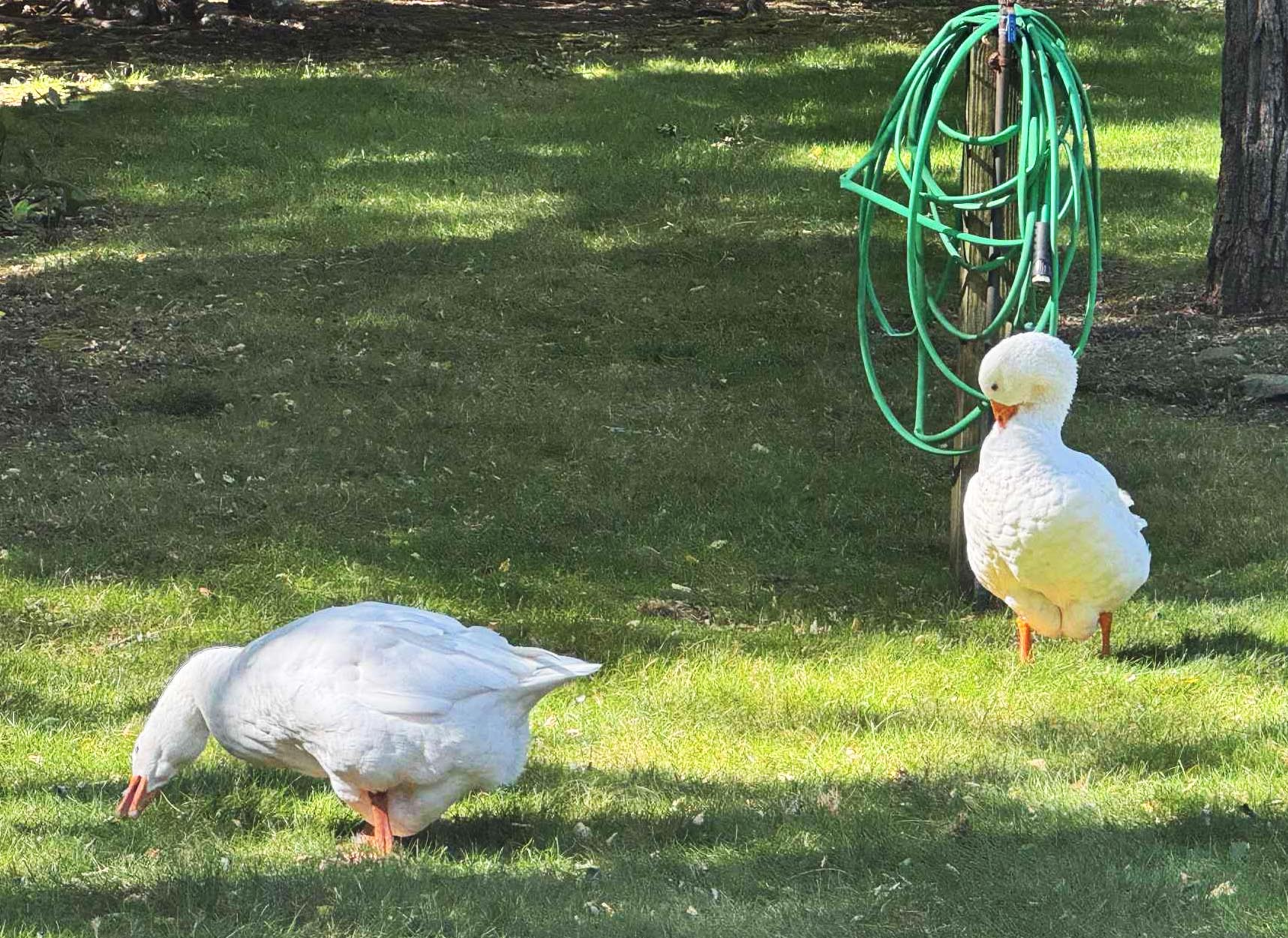
The two geese who would show up by my backdoor throughout my days at the motel
It was around that time that I stepped away from my computer and went to get some lunch and another cup of coffee. I drove aimlessly for a while, thinking about the game and what new way I could approach it to fix the problems I was running into. My procrastination and hesitation to work on this part of the game, I now understand, was my brain telling me it wasn’t going to work no matter what I’d tried.
I recently watched a video by Anne-Laure Le Cunff, neuroscientist and author of the book Tiny Experiments: How to Live Freely in a Goal-Obsessed World, where she said something that made me rethink my definition of procrastination:
I recently watched a video by Anne-Laure Le Cunff, neuroscientist and author of the book Tiny Experiments: How to Live Freely in a Goal-Obsessed World, where she said something that made me rethink my definition of procrastination:
There’s a very simple tool that you can use whenever you experience procrastination. It’s called the “triple check.” And it’s about asking yourself, “Why am I procrastinating?” Is it coming from the head, from the heart, or from the hand?
If it’s coming from the head, it means at a rational level, you’re not fully convinced that you should be working on that task in the first place. If it’s coming from the heart, it means at an emotional level, you don’t think this will be quite fun or enjoyable to work on. And if it’s from the hand, that means even though at a rational level you feel like “I should be working on this” and an emotional level you feel like “that looks like fun,” at a practical level, you’re not equipped with the right tools, or you don’t have the right resources in order to get the job done.
If it’s coming from the head, it means at a rational level, you’re not fully convinced that you should be working on that task in the first place. If it’s coming from the heart, it means at an emotional level, you don’t think this will be quite fun or enjoyable to work on. And if it’s from the hand, that means even though at a rational level you feel like “I should be working on this” and an emotional level you feel like “that looks like fun,” at a practical level, you’re not equipped with the right tools, or you don’t have the right resources in order to get the job done.
For this particular task, I think my head was not convinced it was worthy of focus even if I was trying to convince myself it was. On most days I would avoid working on it, telling myself I wasn’t in the right mood or right frame of mind to work on it. It wasn’t until I forced myself to sit with it for hours of uninterrupted focus, I could no longer ignore the truth of the situation.
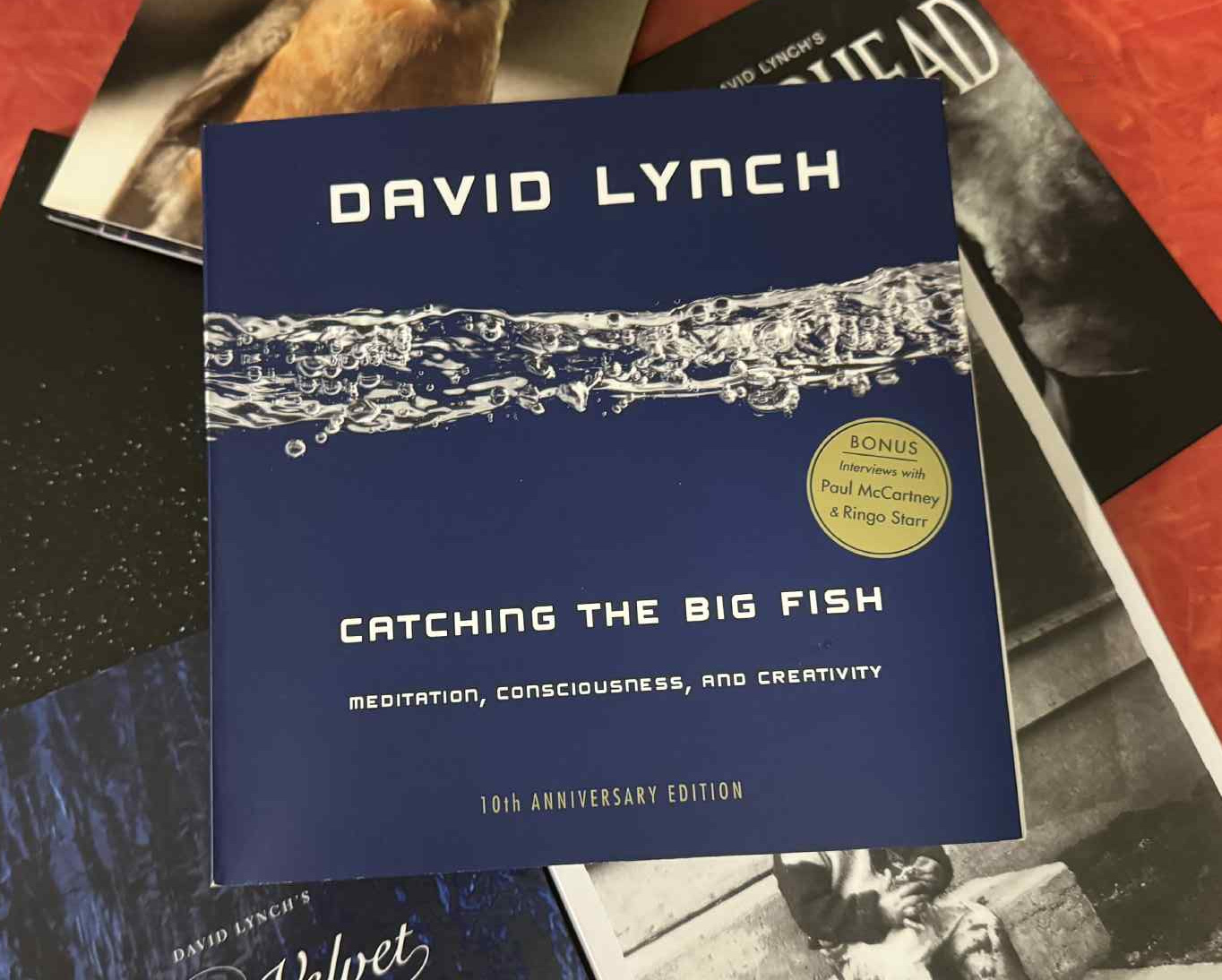
Luckily for me, I was in the middle of re-reading David Lynch’s Catching the Big Fish: Meditation, Consciousness, and Creativity. I believe it was his book and Lynch’s perspective on the creative process that led me to a solution to my problem. In an early chapter of the book titled Interpretation Lynch writes:
A film should stand on its own. It’s absurd if a filmmaker needs to say what a film means in words. The world in the film is a created one, and people sometimes love going into that world. For them that world is real…You don’t need anything outside the work. There have been a lot of great books written, and the authors are long since dead, and you can’t dig them up. But you’ve got that book, and a book can make you dream and make you think about things.
This concept was rolling around in my head as I drove. I can feel the emotional core of my game and know how I’d like it to come across but how do I get players to feel that? I pulled over and picked up a grill cheese sandwich and an iced coffee at the Snowy Owl Café and brought it back to the motel. By the time I sat back at my desk, I had crafted an entirely new approach to the opening of the game that I was excited to start working on. One that would have the player face a weird and sad experience head on in the first section of the game: a much bolder approach that would clearly reflect the tone I’d failed to capture up until now. In this new intro, instead of starting the game in the castle, you begin waking up in a dream world.
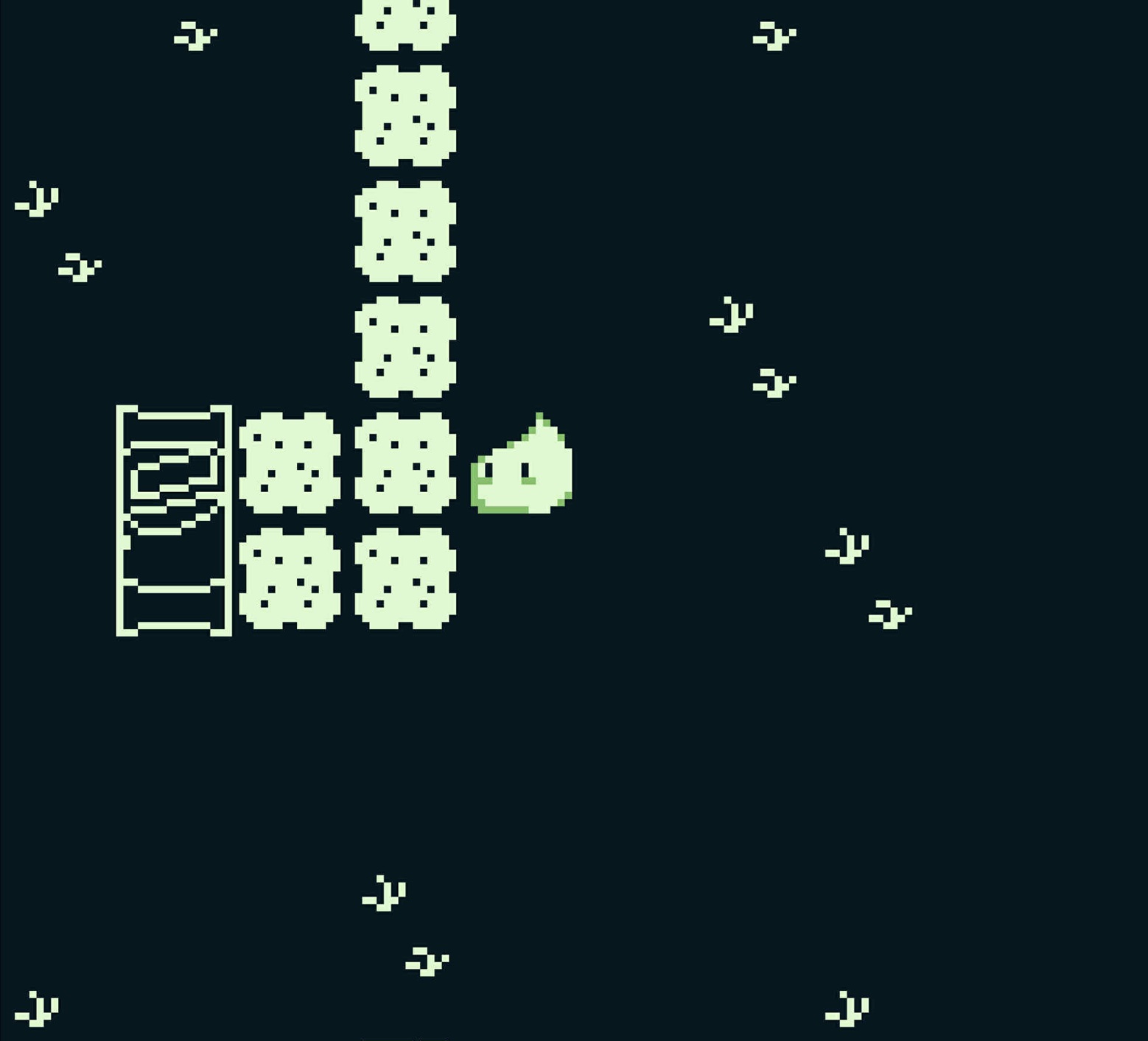
The first thing you do in this dream is interact with a skull which will act as your spiritual guide, giving you further instructions.
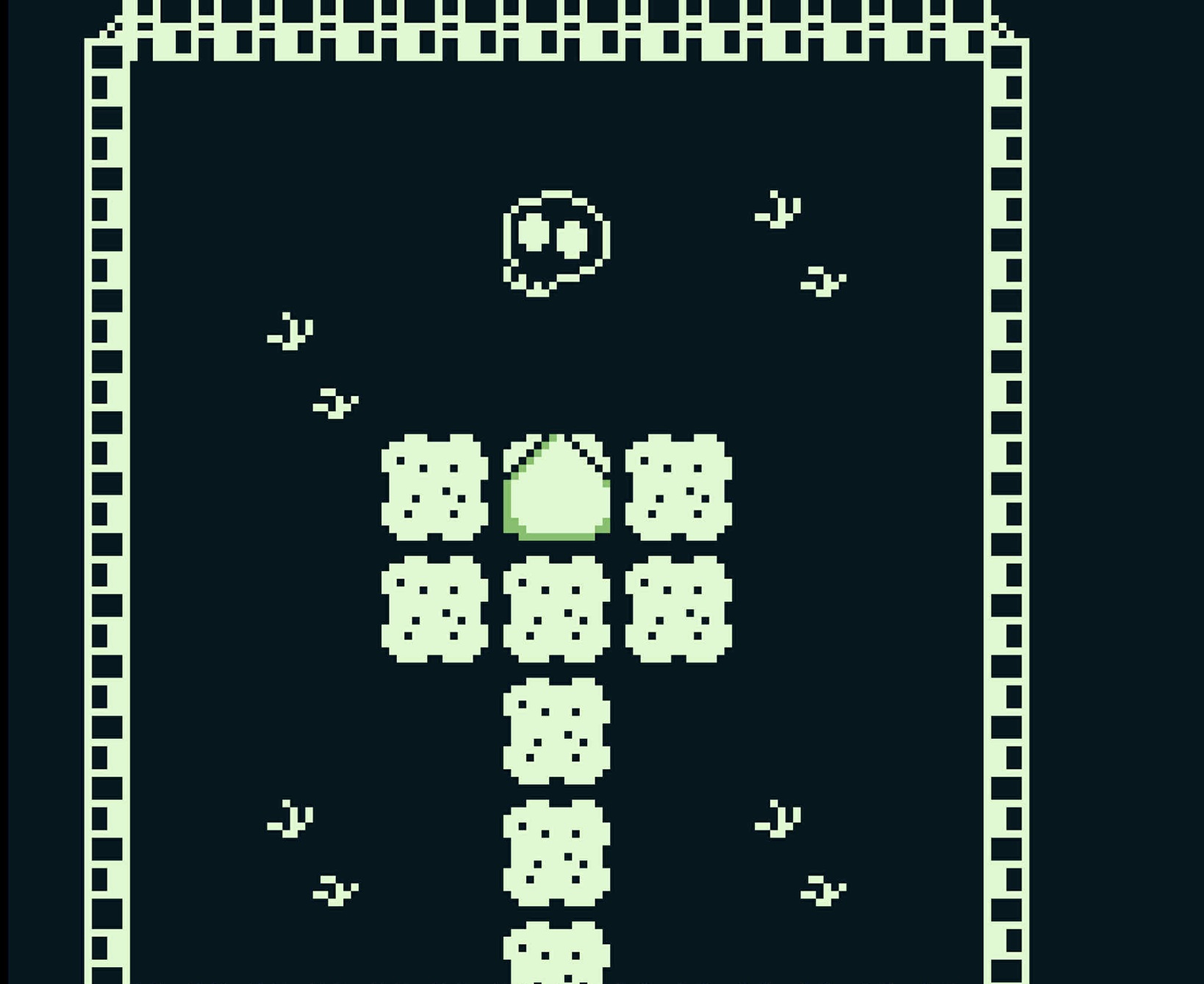
He will direct you to collect four piles of his bones from the areas in the four corners of the small world map.
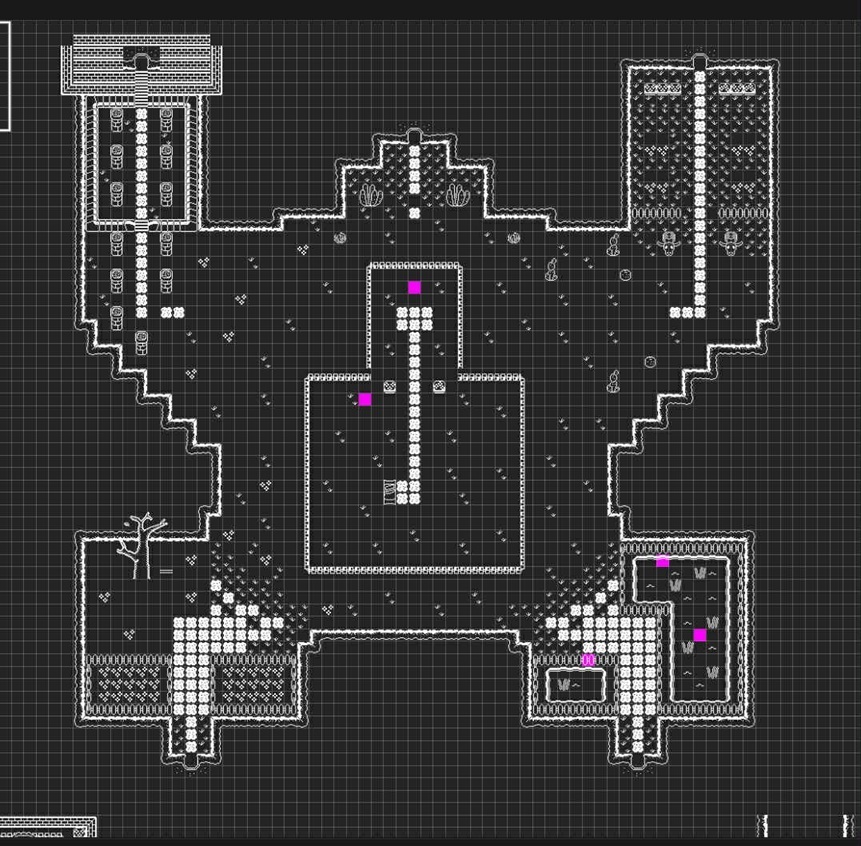
Upon discovering a bone pile, a gravestone will rise from the ground in front of you. When you interact with it, you will receive some backstory and see an image etched onto the gravestone. You will then warp back to the center of the map to go find another pile of bones.
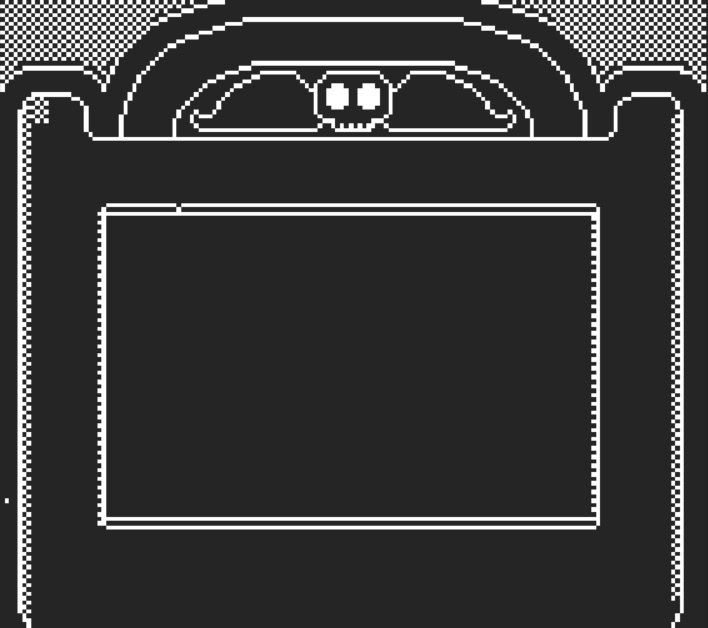
The dream world was always a location I’d envisioned for the game but had never considered starting the game with it. But once I decided to incorporate it as the opening setting, the gameplay loop of exploring a location, finding a bone pile, and receiving some backstory before heading off to explore another location quickly fell into place.
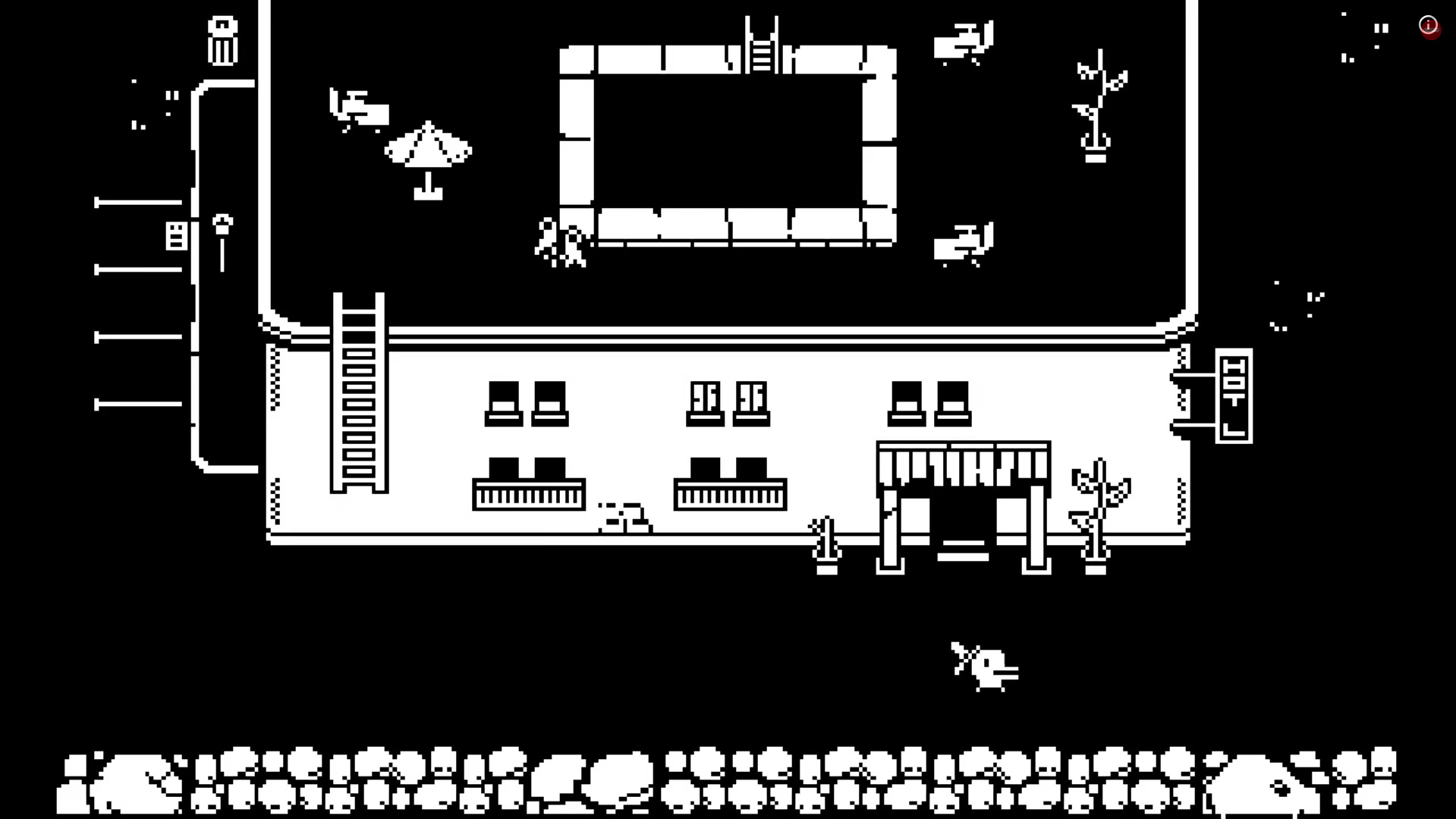
A screenshot from the 2018 time-loop action game Minit
For the aesthetic of the dreamworld, I landed on a minimalist black and white approach that would be bold and a little eerie while still working within the limitations of the Game Boy art style. Since playing the indie game Minit (2018), I’ve wanted to work within this art style, and I was delighted to give myself a reason to.
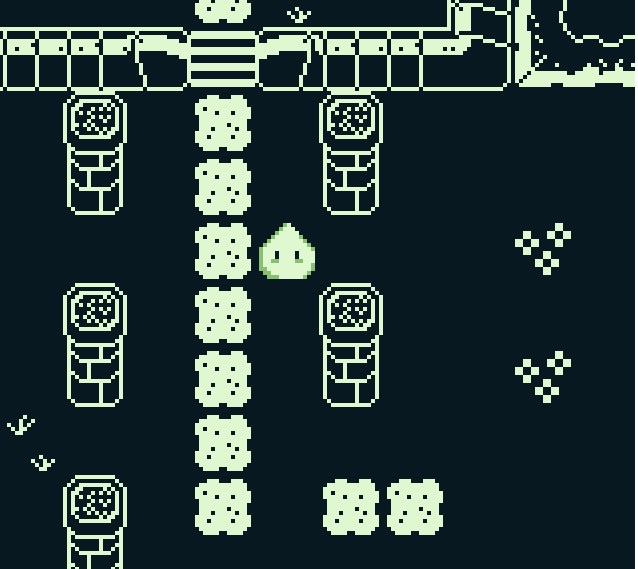
The rest of my time at the motel flew by as I spent nearly every waking hour creating new minimalist assets from my preexisting asset library and building out the new mini world map. One reason why I’d set the weekend aside to push development along was to hopefully get a short playable demo finished in time to present in December at the Boston Festival of Indie Games (BostonFIG). Unfortunately, the submission guidelines ask you to include a playable level of your game, which I just didn’t quite pull together in time. Finding this out was a real bummer but I’d still like to release this (15-20 minute) demo before the end of 2025. Overall, this month has been very productive and allowed me to see what the game needs and how I can craft it to its full potential. David Lynch’s work may not be for everyone, but I think his uncompromising love for art, craft, and a pure artistic vision is something every artist can learn from. Procrastination, on the other hand, may be an annoyance in the moment, but if you can dig deeper and reflect on what may trigger it, it can shed light on how you can realign your approach or expectations to steer yourself in the right direction.
I hope you enjoyed this deep dive into this unique little game. If anything, let it be a reminder that artists and communities can build some beautiful things.
I’ll have some more substantial Sad Land updates next month! I’m taking some time off from my day job later this week to clear my calendar, escape the city, and focus solely on game development to really push this thing forward.
Sincerely,
Neil
I hope you enjoyed this deep dive into this unique little game. If anything, let it be a reminder that artists and communities can build some beautiful things.
I’ll have some more substantial Sad Land updates next month! I’m taking some time off from my day job later this week to clear my calendar, escape the city, and focus solely on game development to really push this thing forward.
Sincerely,
Neil