Originally published on September 30, 2024

Around this time last month, I was scoping out Disneyland on Google Street View as research for this newsletter. At that time, I was gearing up for a trip to Burbank, CA, to meet up with some friends but didn’t imagine I’d be walking down Main Street, USA, just one week later. The friend I was visiting was able to get me into the park for free, and so we decided to make the trip to Anaheim midafternoon, hoping that we’d avoid the worst of the day’s heat by the time we arrived. It was a surreal experience to be freely walking the same streets I had been pouring over and researching several days before.

In mid-August, Disneyland redecorates their entire park for Halloween, and it was fun to see all the additions and alterations that they make throughout the park compared to the last time I’d visited. The most impressive by far is how they completely reskin the Haunted Mansion with The Nightmare Before Christmas theming dubbed Haunted Mansion Holiday.

There are new paintings on the wall, new animatronics, even new audio throughout the tour. In the new overlay, we find Jack Skellington and many other familiar faces from Halloween Town, bringing festive holiday cheer to the Haunted Mansion. The experience reminded me of elaborate video game mods or rom hacks that add so much to the game that it creates an entirely new experience. The recent releases of fan projects Fallout London and Super Mario Eclipse come to mind. You can find a full video recording of the ride over on the Attractions 360° YouTube channel.
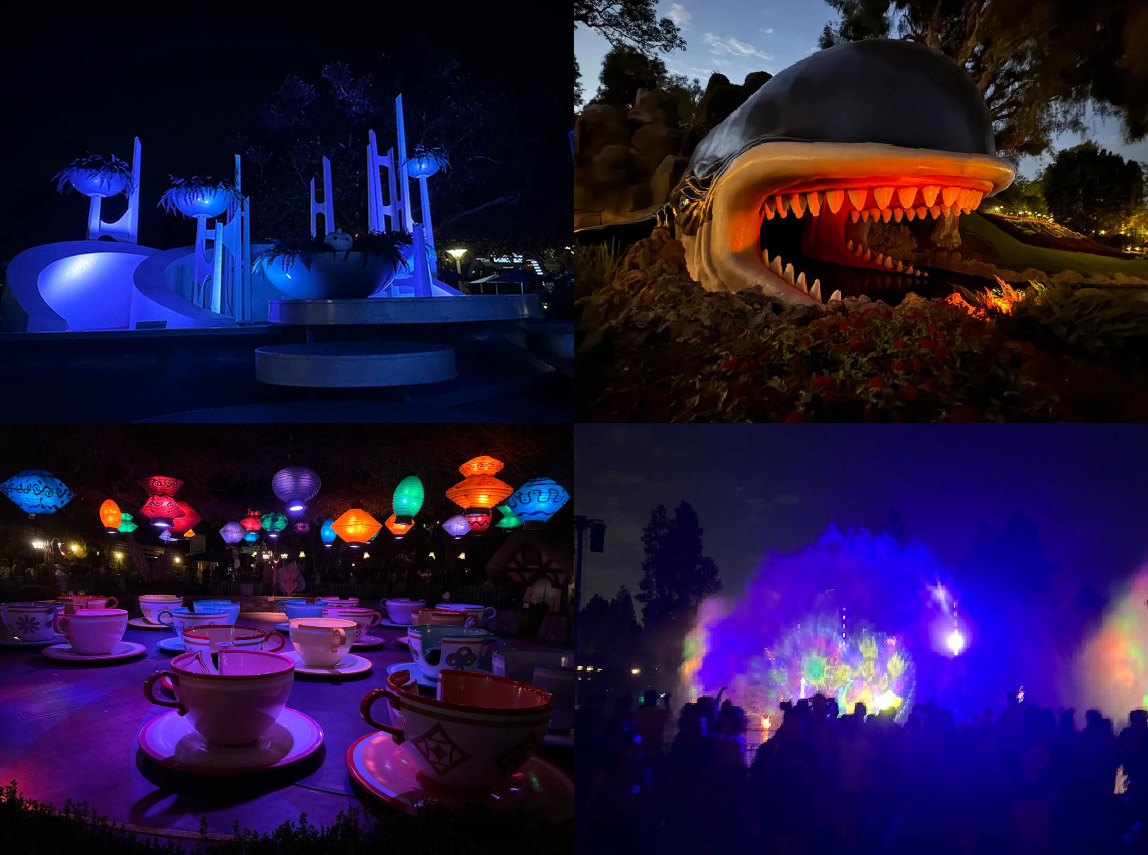
Since we’d been to Disneyland before and we weren’t wiped out from a full day of exploring the park and waiting in lines, we had the time and energy to take a stroll around the park at night and take in the colorful lighting and well-maintained liminal spaces. It was a very fun way to wrap up the summer.
For Sad Land development, this month marked the completion of another feature I had been putting off for at least a year. If you’ve seen any footage of the game in videos or gifs thus far, you may have noticed that the slime character is always anchored at the center of the game window.
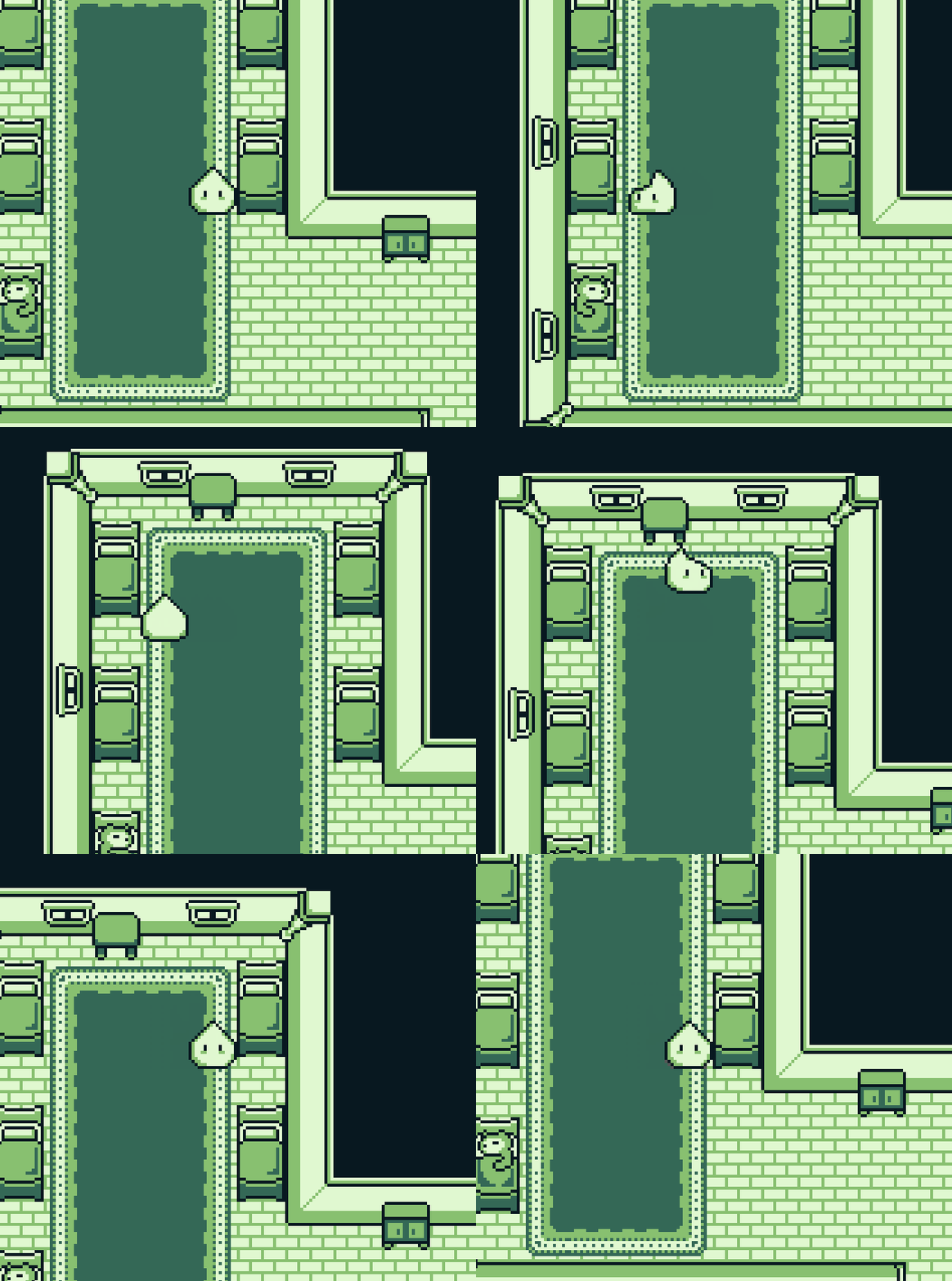
Through my extensive playtesting of the game, this rigid camera never felt intuitive when moving around smaller enclosed areas. The limit of having a static camera like the one I’ve been using is that the player doesn’t get a clear idea of where the absolute boundaries of the play space are located. It makes smaller areas feel larger than they are and makes it more difficult to construct a cohesive mental map.
For any overworld areas of the project, I’ve been handling them in one large Room object. So any overworld locations that take place in the castle are mapped out together one on large plane.
For any overworld areas of the project, I’ve been handling them in one large Room object. So any overworld locations that take place in the castle are mapped out together one on large plane.
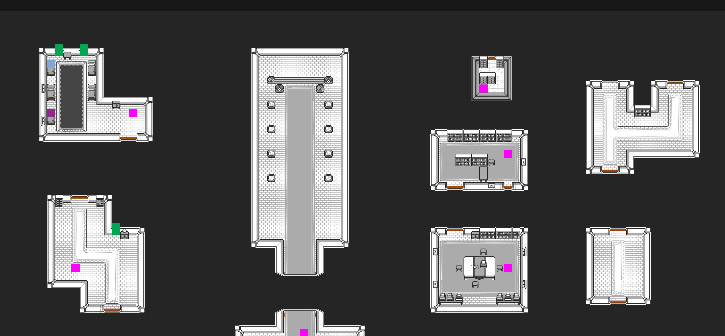
The alternative way to do this would be to have each individual closed-off location as their own small Room object, something I avoided doing as I like to visualize and construct the spaces in a way that allows me to zoom out and see the spaces adjacent to each other, as an architect would use one large paper for a housing floor plan and not several small pieces of paper. This brought some technical debt to the project in ways that I had not originally anticipated. Technical debt is a term usually used by programmers that refers to any choice made earlier on in a project that makes things easier/simpler in the near term but may create problems down the line that will eventually lead to additional work or refactoring.
I coded a new game object that can be stretched over any individual small room that will lock the camera 16 pixels beyond a room’s wall. As someone who dropped out of math class my senior year of high school, I always feel a bit of triumph when I complete a functioning block of code that involves mostly numerical equations.
I coded a new game object that can be stretched over any individual small room that will lock the camera 16 pixels beyond a room’s wall. As someone who dropped out of math class my senior year of high school, I always feel a bit of triumph when I complete a functioning block of code that involves mostly numerical equations.
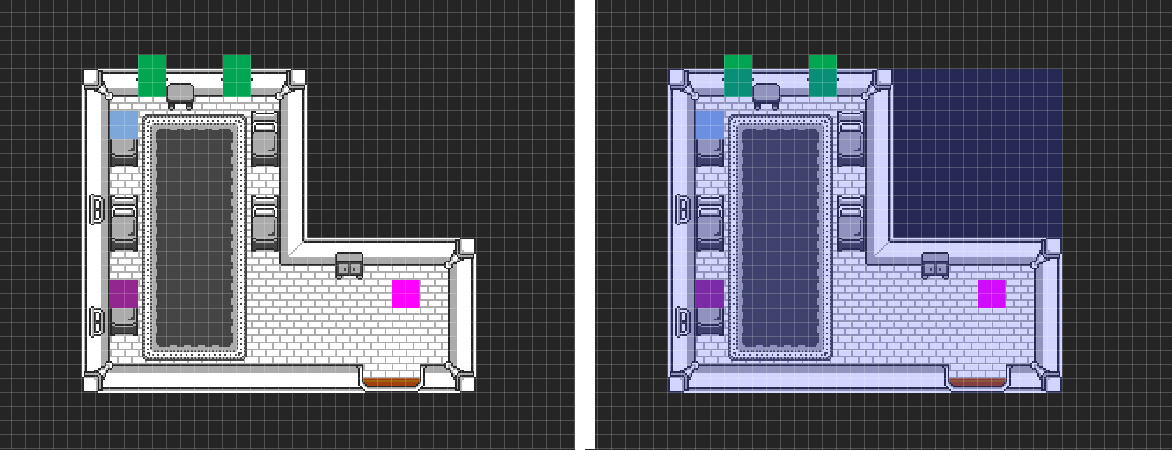
An individual room in the castle before (left) and after (right) I designate a subroom area.
Now that this feature is complete, any time I want the player to hit up against a clear edge of a room, I can drop a new subroom Object over the space.
With this feature implemented, I’m at the point where the lion’s share of development time is building art assets and writing dialogue for the game. It is very freeing to have a strong scaffolding to prop up story and characters, although refining those aspects can introduce their own challenges.
Last year I did some demake fanart of Elechead and Signalis, two of my favorite games released in in the last few years. Demake is a term usually referring to fan video games or video game fanart that depicts a simpler graphical style than the work’s inspiration. As I have so much experience working with the minimalist color pallet and chunky pixel-art aesthetic of the Game Boy, I wanted to explore other characters and settings using that toolbox.
Last year I did some demake fanart of Elechead and Signalis, two of my favorite games released in in the last few years. Demake is a term usually referring to fan video games or video game fanart that depicts a simpler graphical style than the work’s inspiration. As I have so much experience working with the minimalist color pallet and chunky pixel-art aesthetic of the Game Boy, I wanted to explore other characters and settings using that toolbox.
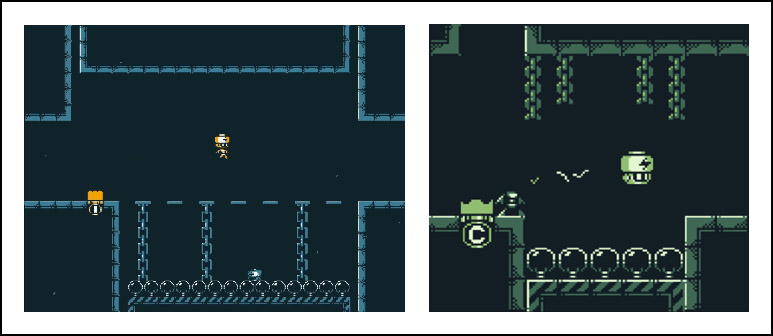
A screenshot of the game Elechead (left) alongside my Game Boy fanart (right).
The game already lends itself to this style so adapting the color pallet and tilesheets to the limitations of the Game Boy wasn’t too much of a stretch.
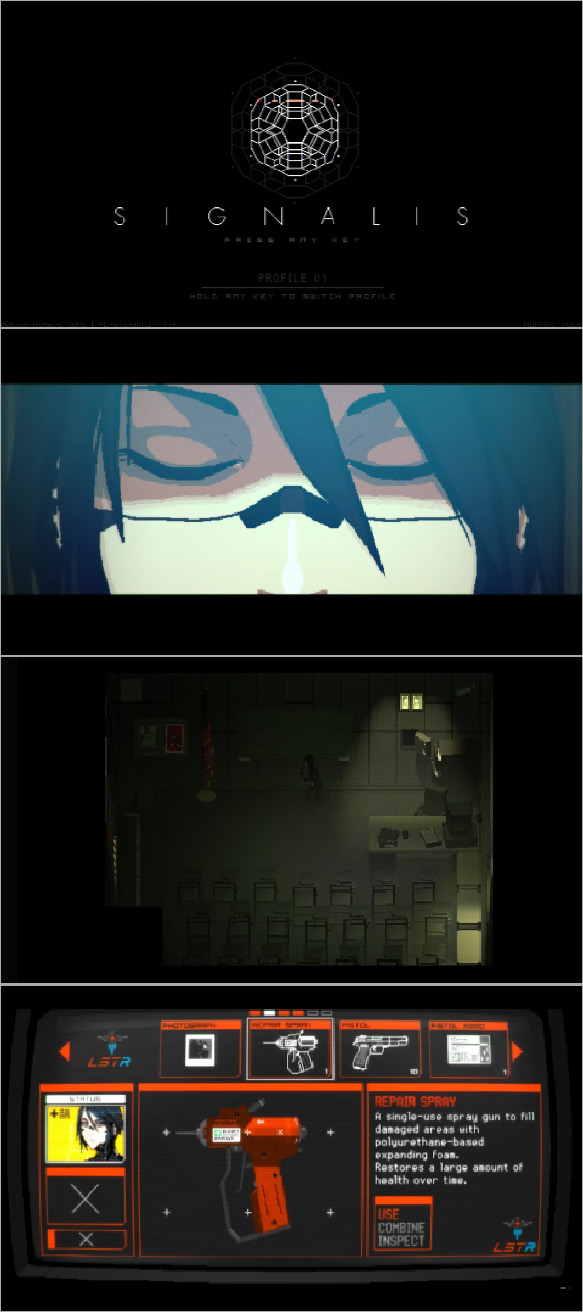
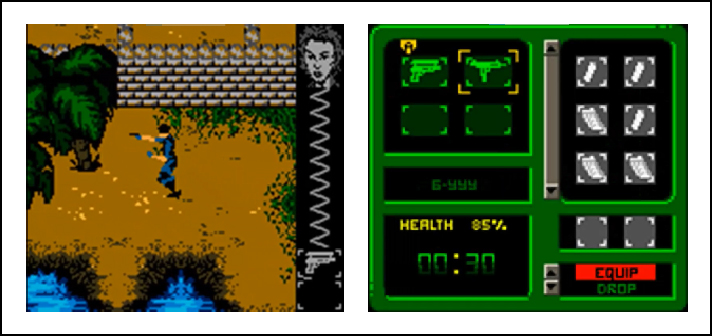
Signalis was my first time playing a survival-horror game, a genre I’d always been hesitant to try with my lifelong (up to recent) aversion to horror. With a Cassette Futurist aesthetic, moody atmosphere, and dense sci-fi narrative, I had a hard time putting it down until I reached the end credits. Shortly after finishing the game, I came across Perfect Dark on the Game Boy Color, a game that - to my eyes - visually matched what a simplified version of Signalis could be.
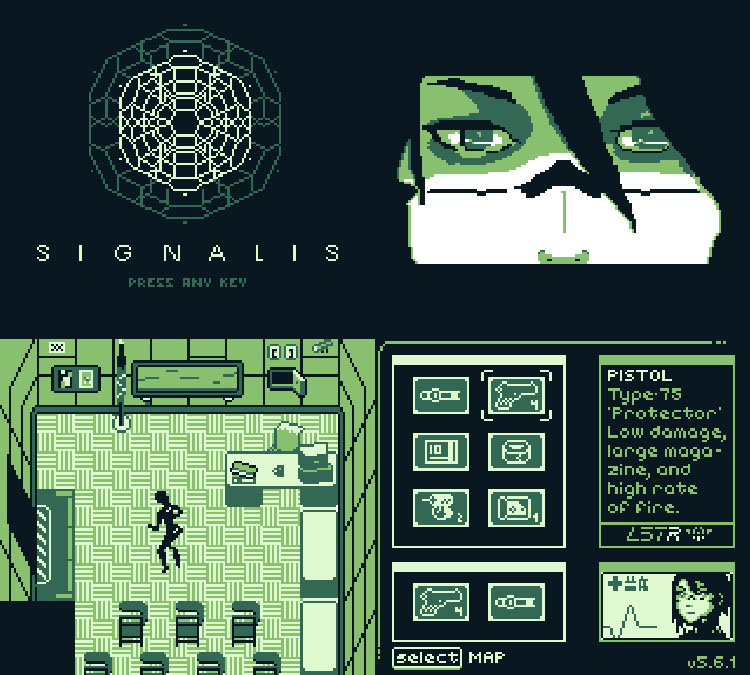
The idea of giving Signalis the Game Boy demake treatment lingered in my brain for a few months before committing to the idea early last summer. I felt one image did not supply enough of an exploration of the idea, so I settled on four distinct visual displays – title screen, cutscene, gameplay, and pause menu – to supply a wholistic view of how this hypothetical game might function.
Back in April, the YouTube Video Essayist John Walsh released a 2-hour video called The Bizarre World of Fake Video Games to his channel Super Eyepatch Wolf. I was in Rome at the time, relaxing in my AirBnB after several days of extensive sightseeing and the video was the perfect companion to a slow afternoon of decompression. In the video, Walsh cites several examples of false video game rumors, fanart for hypothetical games with hinted-at mechanics, and a fascinating deep-dive into the book Vermis from artist PLASTIBOO, an extensive and beautifully-rendered player’s guide for a game that does not exist.
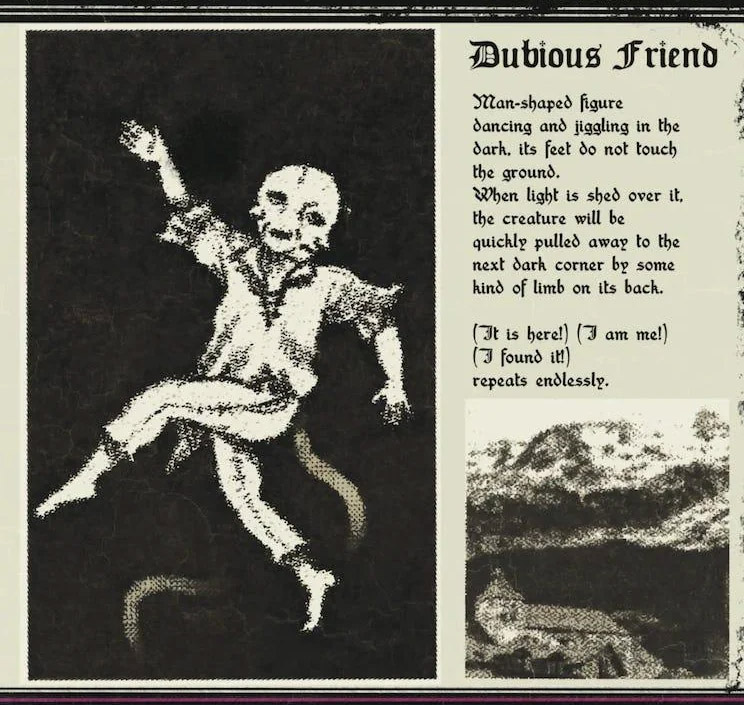
One sample of the twisted nightmares Vermis has to offer.
Walsh covers the topic of fake video games from many different angles, conveying a deep love for the subject…
I genuinely think fake video games invite the viewer to engage in a way that few other art forms do. And the fact that they don’t actually exist, that they are not complete projects is a huge part of that because it forces us to ask, not ‘what is this?’ but ‘what could it be?’ It’s a really powerful thing. Something that would arguably lost if these were complete video games.
Before I touched a line of code, Sad Land existed in the space between comic and fake video game.
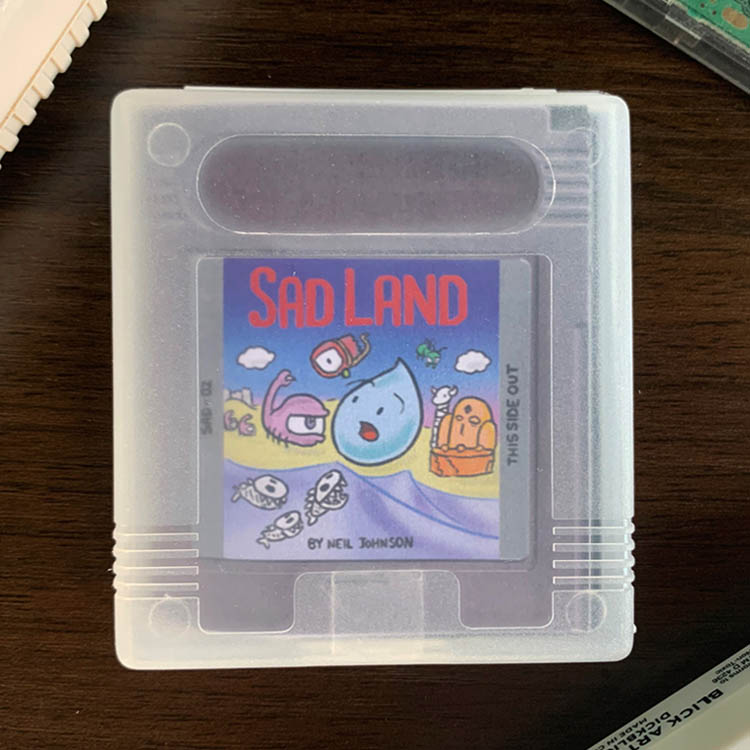
I had been accepted to table at the Massachusetts Independent Comic Expo that year and wanted my new comic’s packaging to stand out at the show and call out to people who might like it. The idea of turning it into an actual game tossed and turned in my head for at least two years before I started any production on the game itself. I didn’t know exactly what went into building a game, even a simple one, but the nebulous difficulty of game development kept me away from the project until I felt ready to start researching what software I’d need to make a theoretical concept a reality. At the tail end of Walsh’s video, he talks about why some people choose to make speculative art instead of jumping into game development:
Video game development is a viper’s nest of multiple art and technical sciences all pulling each other apart. The worst game you have played is a miracle. But with fake video games, they allow people to make the illusion of those realities without the monolithic barrier to entry.
Working on my game often feels like making a quilt out of hundreds of smaller ideas. Each song programmed or new character design for the game is its own artistic statement with a point of inspiration and creative process.
My favorite video game gag from The Simpsons is a non-sequitur that shows Bart’s nerdy classmate Martin playing a My Dinner with André arcade cabinet.
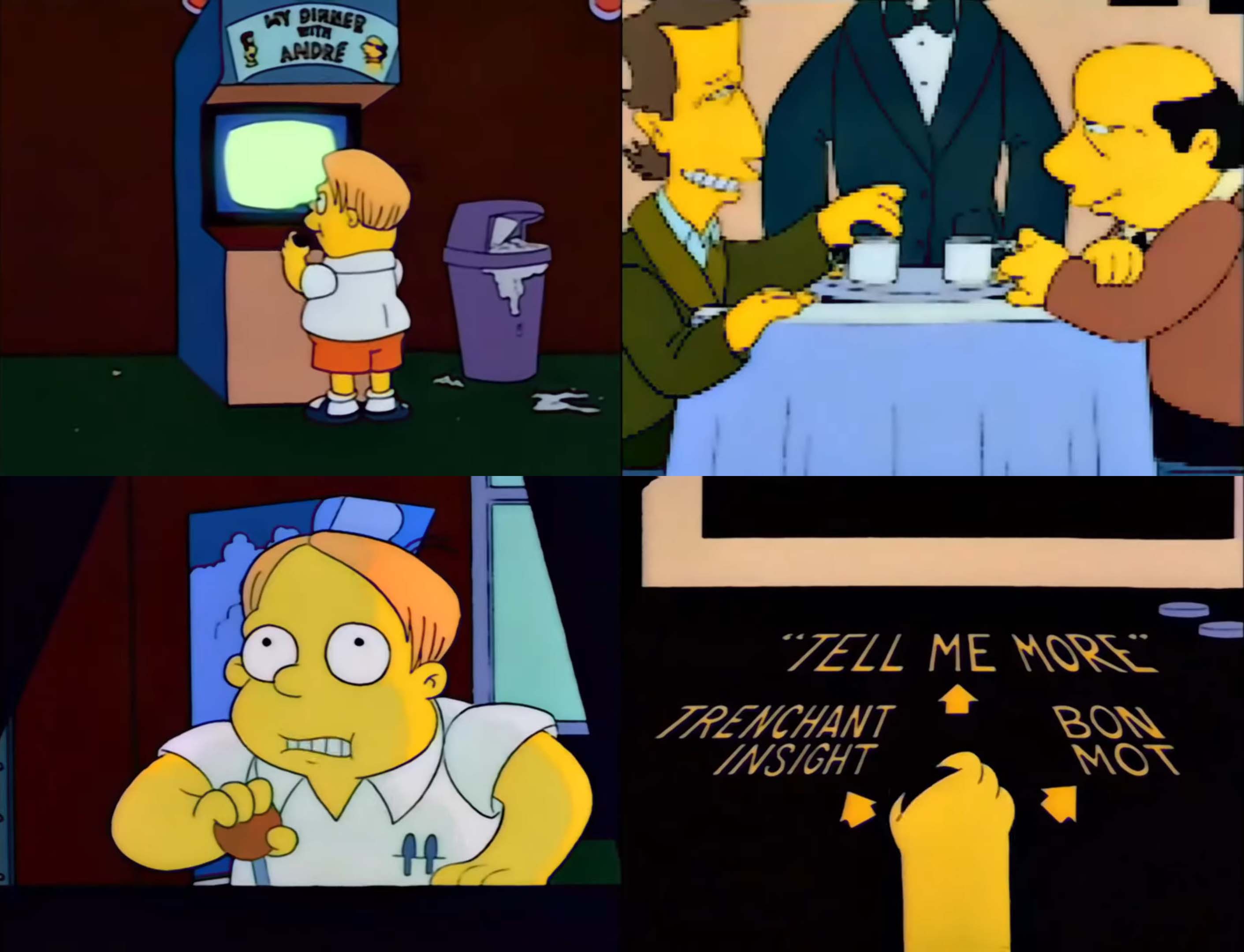
We get a glimpse of the game itself, a short cutscene meant to convey the dry, intellectual tone of the film in one line (“Thirsting for the way to name the unnamable, to express the inexpressible.”), before cutting back to Martin leaning forward with a joystick in hand. He pushes the joystick forward, selecting the TELL ME MORE option while also saying it out loud to himself. I didn’t actually see the film until last year, but I remember it being brought up in media like this frequently throughout my childhood. It stood in as the quintessential, stuffy type of art for an NPR audience and pretty much no one else. I love the movie and seeing it has made this joke even funnier to me. Since airing in 1993, we’ve seen a lot of change in the video game landscape, making way for games like the My Dinner With André arcade game. The Beginner’s Guide comes to mind: a game some may see as a slow, over-intellectual, guided walking tour (if that sounds good to you, I highly recommend). There’s Her Story, a game where the core mechanic is sifting through video clips in an archaic digital database. You too have games like Baldur’s Gate 3 or Disco Elysium that have garnered huge audiences while each holding word counts that exceed Moby Dick and War and Peace combined.
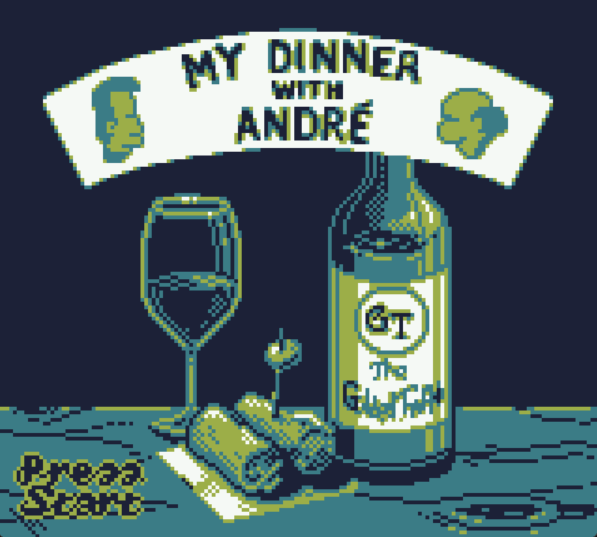
While doing research for this newsletter I discovered that indie developer Gumpy Function created a playable Game Boy version of the My Dinner with André arcade game. For those following along at home, that’s a real playable game (released in 2022, playable on a system released in 1989) inspired by a fake game (as seen on an episode of The Simpsons in 1993) inspired by a real movie (released in 1981) written and starring real-life friends André Gregory and Wallace Shawn playing fictionalized versions of themselves.
If you’ve gotten this far, thanks for taking this journey with me down this strange tangent. This month has had a few big video game releases. UFO 50 has been a lot of fun so far and may be the focus of a newsletter in the coming months. Until then, take a moment to enjoy the beautiful fall foliage!
Sincerely,
Neil
If you’ve gotten this far, thanks for taking this journey with me down this strange tangent. This month has had a few big video game releases. UFO 50 has been a lot of fun so far and may be the focus of a newsletter in the coming months. Until then, take a moment to enjoy the beautiful fall foliage!
Sincerely,
Neil