Originally published on January 31, 2026
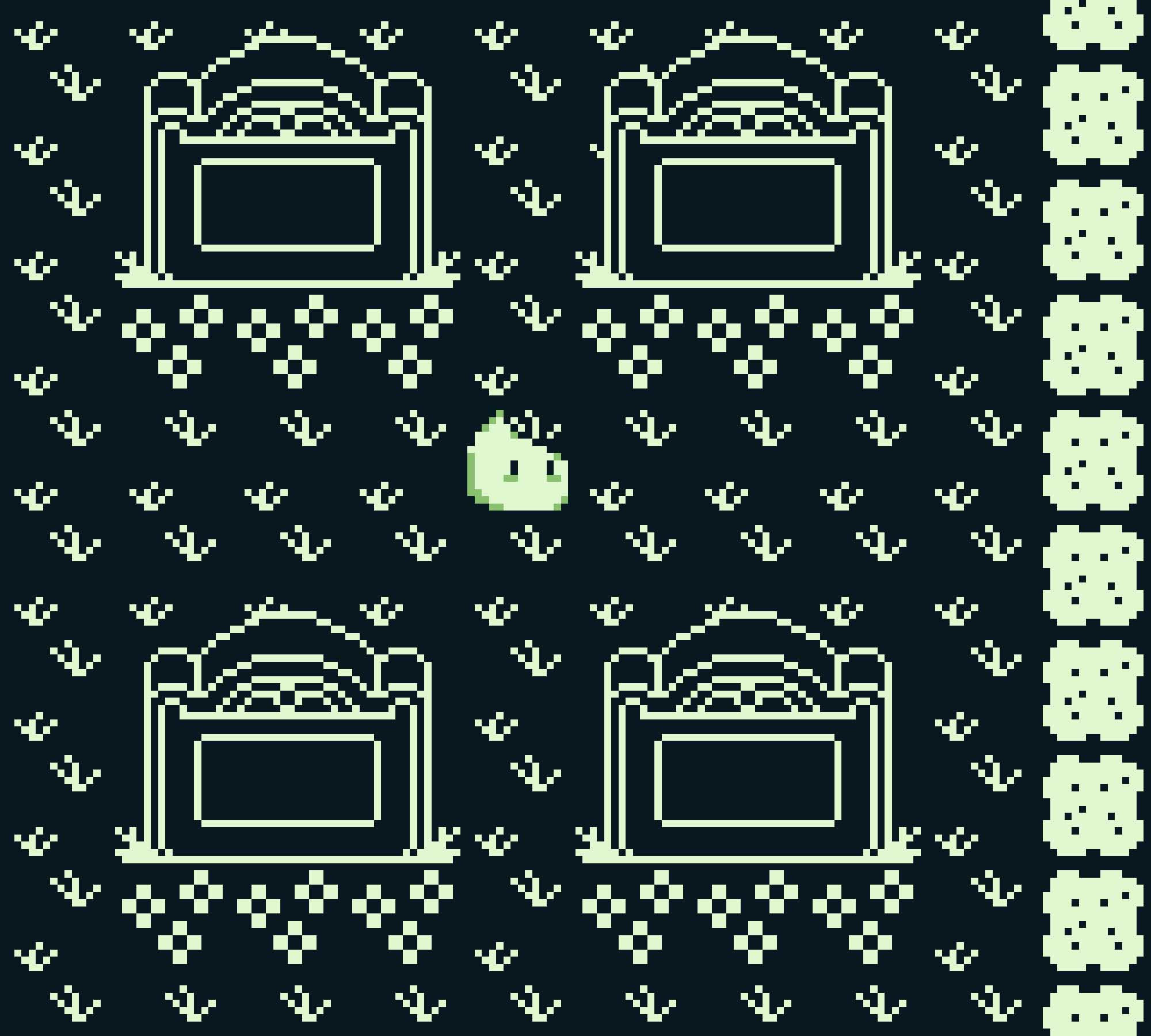
Happy new year! It’s been a very production month for development on Sad Land. There are five total areas that I am building out (four main areas of exploration connected by a hub area) and two of those areas (the hub and the graveyard) are both ostensibly complete with functionality and art assets. Having one of the areas built out gives me a good idea of what I’m looking for in terms of intractability and length, which makes it far easier to predict how long the remaining three areas will take to flesh out.
Last January, I chose to write about several disconnected smaller topics, inspired by the podcast 99% Invisible who put out a selection of mini-stories every year around the holidays. The idea is that the producers present stories they find interesting but might not have enough meat on their bones to be developed into a full episode (their most recent one has a fascinating story about the Titanic that is well worth a listen). I love the idea of giving space to these little tangents and so I’m continuing my tradition of sharing these “side quests.”
THE RUBIK'S CUBE
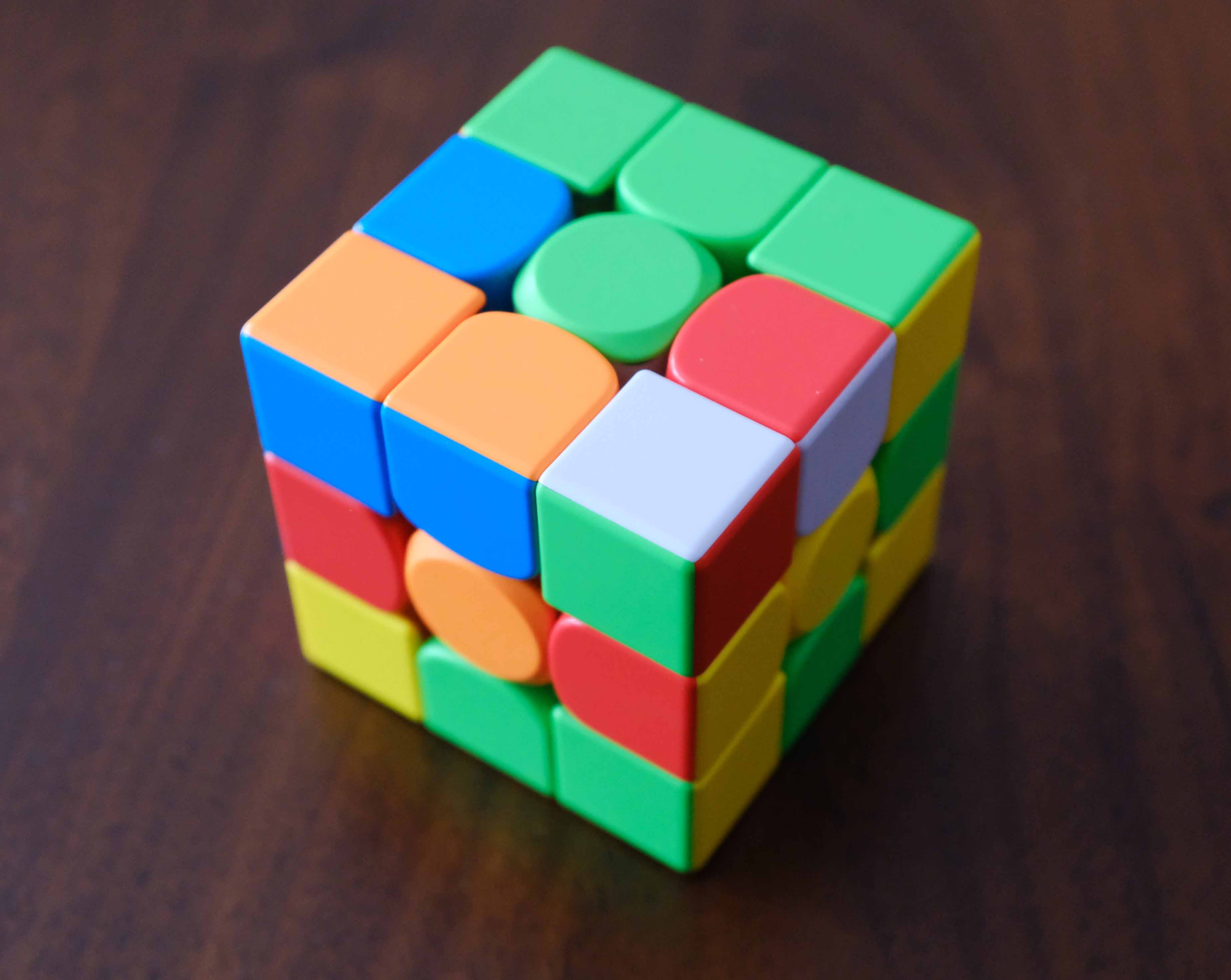
2025 was the year I finally took the time to learn how to solve a Rubik's Cube. I’d always wanted to learn how to solve a Rubick’s Cube but viewed solving it on my own as the “purest” way to engage with the cube itself, and that following a how-to guide would defeat the point of engaging with it in the first place. As if spending hours or even years of my life struggling with its shifting geometry and cracking its code through sheer intelligence and grit was a noble pursuit. I trashed this concept the moment I got one and decided to go to YouTube to find a tutorial on how to finally solve the cube. Purity is a myth.
It took me a few hours and a lot of patience over several days to finally shift the cube back to its original configuration. Video tutorials on YouTube helped the most, switching to a different tutorial whenever I got stuck or found the directions in the video to be difficult to parse. I had a whole page of notes, transcribing the steps into a manual with sketches and phrasing that made sense to me. Once I figured out the first few steps, I would practice just those; getting halfway through the puzzle and then and starting over. Once I was comfortable with where I was, I would learn the next step and practice that until moving on. Before long, I finally solved the cube!
It took me a few hours and a lot of patience over several days to finally shift the cube back to its original configuration. Video tutorials on YouTube helped the most, switching to a different tutorial whenever I got stuck or found the directions in the video to be difficult to parse. I had a whole page of notes, transcribing the steps into a manual with sketches and phrasing that made sense to me. Once I figured out the first few steps, I would practice just those; getting halfway through the puzzle and then and starting over. Once I was comfortable with where I was, I would learn the next step and practice that until moving on. Before long, I finally solved the cube!
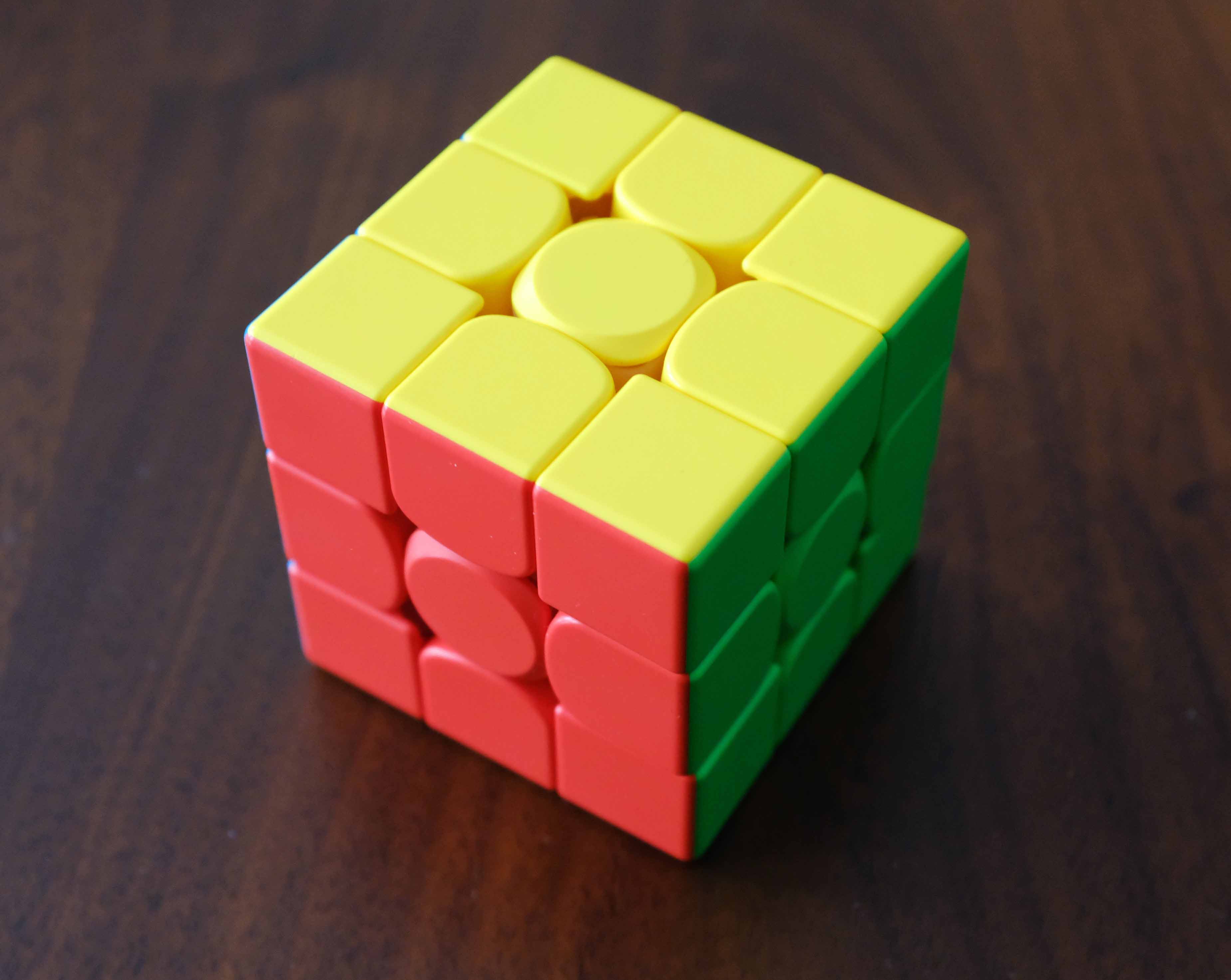
Solving it once was not the end of my journey. From there I worked up to solving it without my notes. Then solving it three times in a row without messing up and resetting. Little by little I fumbled my way into mastering the cube. Now I can pick up any 3x3 Rubik’s Cube and solve it within a few minutes (although I’ve found magnetic speed cubes far easier to turn and much easier on the wrists than the classic model).
I played a lot of games for the first time in 2025 and the Rubik’s Cube was one of my favorites.
I played a lot of games for the first time in 2025 and the Rubik’s Cube was one of my favorites.
THE TOASTER PROJECT
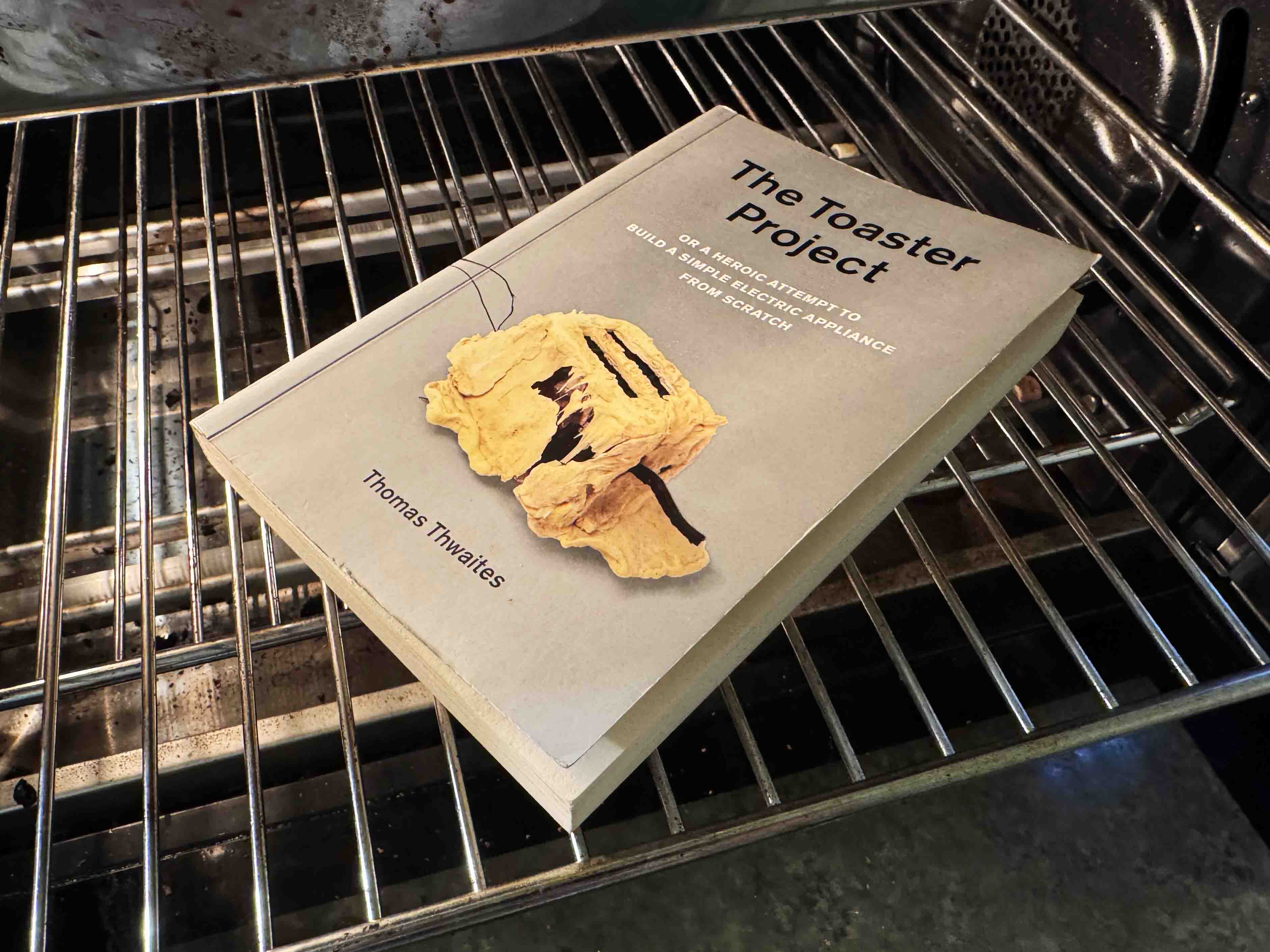
Last year I read The Toaster Project: Or a Heroic Attempt to Build a Simple Electric Appliance from Scratch after it caught my eye while browsing the used book section of the Brookline Booksmith. The book catalogues author Thomas Thwaites’ creative journey as he sets out to reverse engineer and construct a cheap consumer toaster using only raw materials he can collect himself. Like any good project it has a scope (make a functional toaster), well-defined parameters (three self-imposed rules that become more flexible as time went on), and a deadline (he gives himself 9 months to finish, just in time to present the project as part of his MA in Design Interactions degree at the Royal College of Art).
Thwaites’ rules for his toaster construction are as follows:
1. The toaster must be like the ones they sell in the shops (one that loads from the top and plugs into the wall).
2. He must make all the parts of my toaster starting from scratch (using materials as close to he can get them from the natural world).
3. He will make his toaster on a domestic scale (using only tools and methods that would were around before the Industrial Revolution). As days turn into months, Thwaites catalogues his trips through the UK and the conversations he has with experts and people with access to raw materials. From extracting solid copper from the water scooped out of an old copper mine (successful) to calling up a BP oil representative to see if he could ride along in one of their helicopters to retrieve a jug of oil from a rig (unsuccessful), Thwaites’ writing fluctuates between tongue-in-cheek playfulness to passionate determination all in the pursuit of something that is both seemingly impossible and outright useless. However, even in failure, you can learn quite a bit.
Thwaites’ rules for his toaster construction are as follows:
1. The toaster must be like the ones they sell in the shops (one that loads from the top and plugs into the wall).
2. He must make all the parts of my toaster starting from scratch (using materials as close to he can get them from the natural world).
3. He will make his toaster on a domestic scale (using only tools and methods that would were around before the Industrial Revolution). As days turn into months, Thwaites catalogues his trips through the UK and the conversations he has with experts and people with access to raw materials. From extracting solid copper from the water scooped out of an old copper mine (successful) to calling up a BP oil representative to see if he could ride along in one of their helicopters to retrieve a jug of oil from a rig (unsuccessful), Thwaites’ writing fluctuates between tongue-in-cheek playfulness to passionate determination all in the pursuit of something that is both seemingly impossible and outright useless. However, even in failure, you can learn quite a bit.
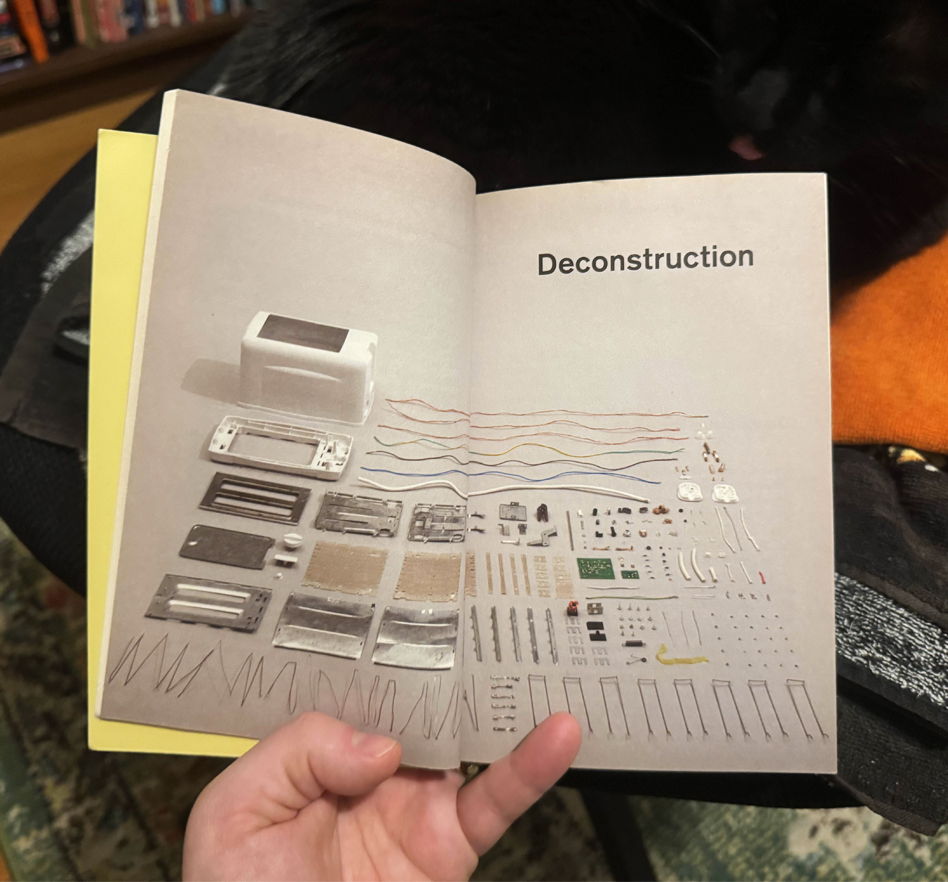
One of the first things he does is deconstruct a cheap toaster to catalog each piece to discern which materials he’ll need for construction. He groups the components by type, resulting in a list of the raw materials he’ll need to recreate each individual component: steel, mica, plastic, copper, and nickel.
His first stop on the trip is the Clearwell Caves, an ancient iron mine in Clearwell, England, which today is now a museum and tourist attraction. Thwaites calls ahead to see if they’re amenable and then he, his friend Simon, and an empty suitcase take a 139-mile train ride to fish some iron ore out of the mine himself. When they get there, they are greeted by Ray Wright, a miner who reopened the Clearwell Caves in 1968, converting the former mining site to a working museum. There is some confusion when they arrive as Wright thought Thwaites said he was making a “poster” and not a “toaster” but agrees to help him out regardless. Thwaites soon learns that mining new iron ore would be too dangerous and costly, but Wright opts to supply him with some spare rocks from a display at the end of the tour.
His first stop on the trip is the Clearwell Caves, an ancient iron mine in Clearwell, England, which today is now a museum and tourist attraction. Thwaites calls ahead to see if they’re amenable and then he, his friend Simon, and an empty suitcase take a 139-mile train ride to fish some iron ore out of the mine himself. When they get there, they are greeted by Ray Wright, a miner who reopened the Clearwell Caves in 1968, converting the former mining site to a working museum. There is some confusion when they arrive as Wright thought Thwaites said he was making a “poster” and not a “toaster” but agrees to help him out regardless. Thwaites soon learns that mining new iron ore would be too dangerous and costly, but Wright opts to supply him with some spare rocks from a display at the end of the tour.
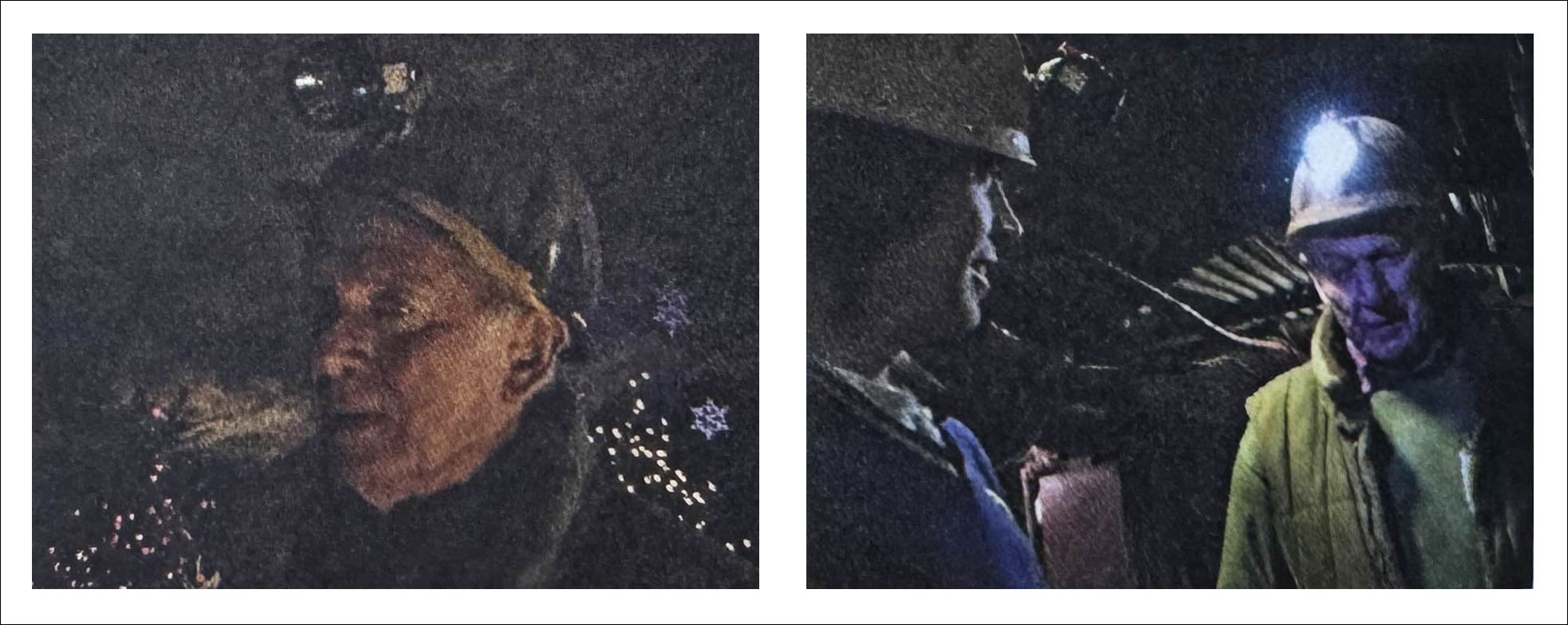
Although the mine is no longer active, Thwaites learns that there is some light mining activity…
Ray does some mining at his mine though, for grammes, rather than tonnes, of a substance called iron ochre. This is basically rusty iron powder, which is used as a pigment in lipstick and artists’ oil paints.
I think Ray thought it a good idea to keep at least some mining going (even if just to make lipstick) so as not to end the history of mining that stretches back to a time when most residents of these islands lived in hovels (or indeed in the caves at Clearwell themselves). I wonder if Ray feels there’s something slightly ignominious about his mine having been turned into a tourist attraction.
What would have to change for the iron at Clearwell to be worth mining again? Probably nothing short of a total global economic collapse. According to Ray, this is prophesied to happen in 2012 when the Mayan calendar runs out of numbers. I think he is holding out hope that Clearwell will become a working mine again sooner rather than later.
I think Ray thought it a good idea to keep at least some mining going (even if just to make lipstick) so as not to end the history of mining that stretches back to a time when most residents of these islands lived in hovels (or indeed in the caves at Clearwell themselves). I wonder if Ray feels there’s something slightly ignominious about his mine having been turned into a tourist attraction.
What would have to change for the iron at Clearwell to be worth mining again? Probably nothing short of a total global economic collapse. According to Ray, this is prophesied to happen in 2012 when the Mayan calendar runs out of numbers. I think he is holding out hope that Clearwell will become a working mine again sooner rather than later.
The Toaster Project was published in 2011. I learned while writing this that Ray Wright died in 2015 after a long battle with bone cancer. Reading through his obituary on the BBC’s website, it is clear Wright was a man committed to a vision and cared deeply about sharing history and knowledge.
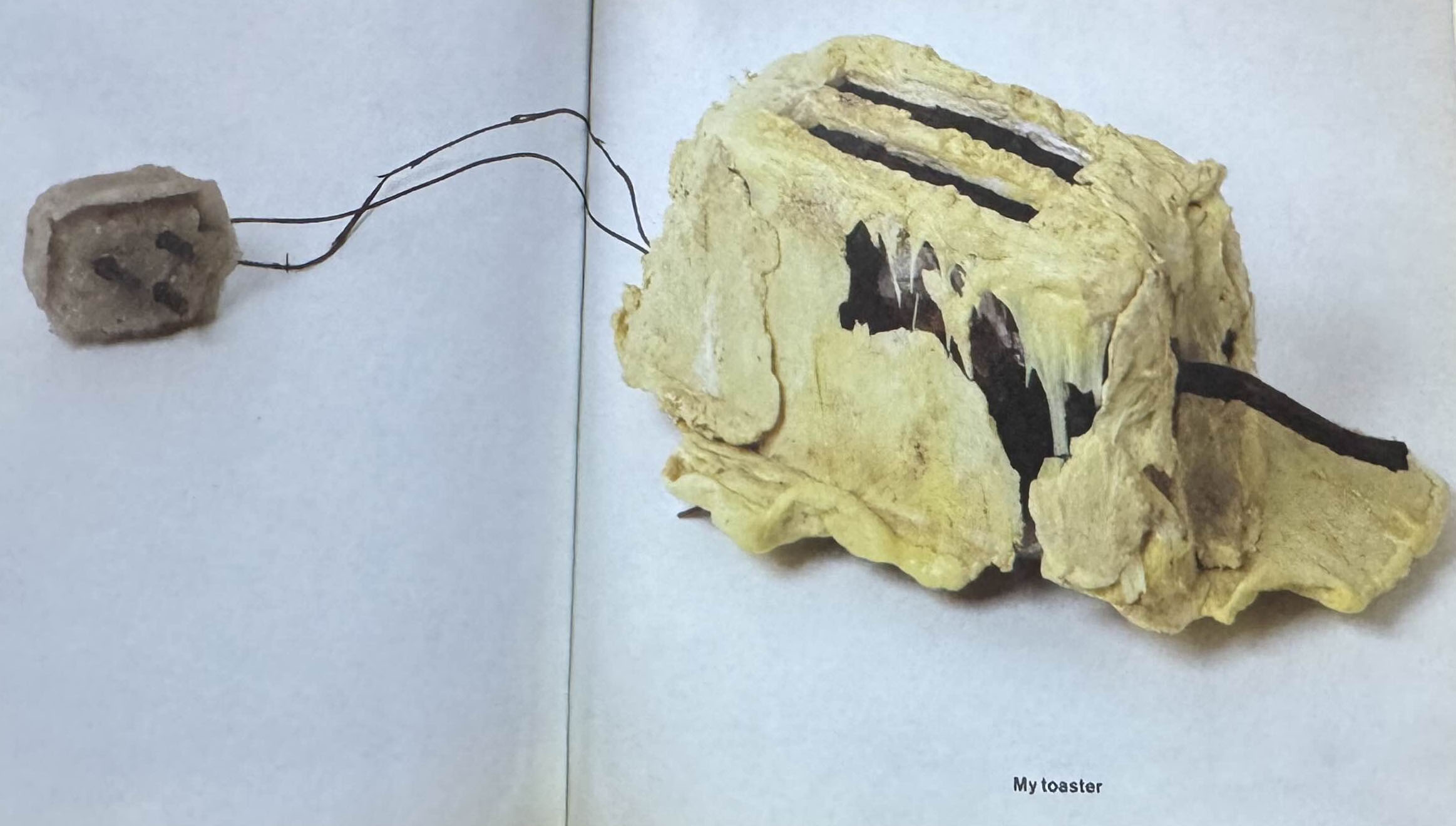
The Toaster Project is about a lot of things: technology, curiosity, problem solving, discovery, engineering, minerals, adaptation, and finishing a too-ambitious project on a deadline. Layered on top of it you also have a journey of human connections, regulation, and history. Who can teach you about raw materials? Who can help you access them? What regulations are in place (for safety reasons or otherwise) that keep you from those minerals? And when you fully grasp Thwaites’ journey (1,900 miles traveled), the total cost (£1,187.36 spent), and all of the effort in between, the prospect of stopping by Target to pick up a Hamilton Beach toaster for $19.99 feels like a modern marvel. Conceptually, a Best Buy warehouse with its computers, smart gadgets, and refrigerators is a grand trove of impossible miracles: machines produced through the effort and ingenuity of human beings using tools and minerals.
The reason I’m bringing it up here is that throughout reading the book, I couldn’t help but draw connections between Thwaites’ Toaster Project and my experience building Sad Land. Toasters, video games, and most every commercial product exists alongside us; we purchase them, we use them, but how they came into being and how they are built are often a mystery to us.
The reason I’m bringing it up here is that throughout reading the book, I couldn’t help but draw connections between Thwaites’ Toaster Project and my experience building Sad Land. Toasters, video games, and most every commercial product exists alongside us; we purchase them, we use them, but how they came into being and how they are built are often a mystery to us.
A NEW BOKU
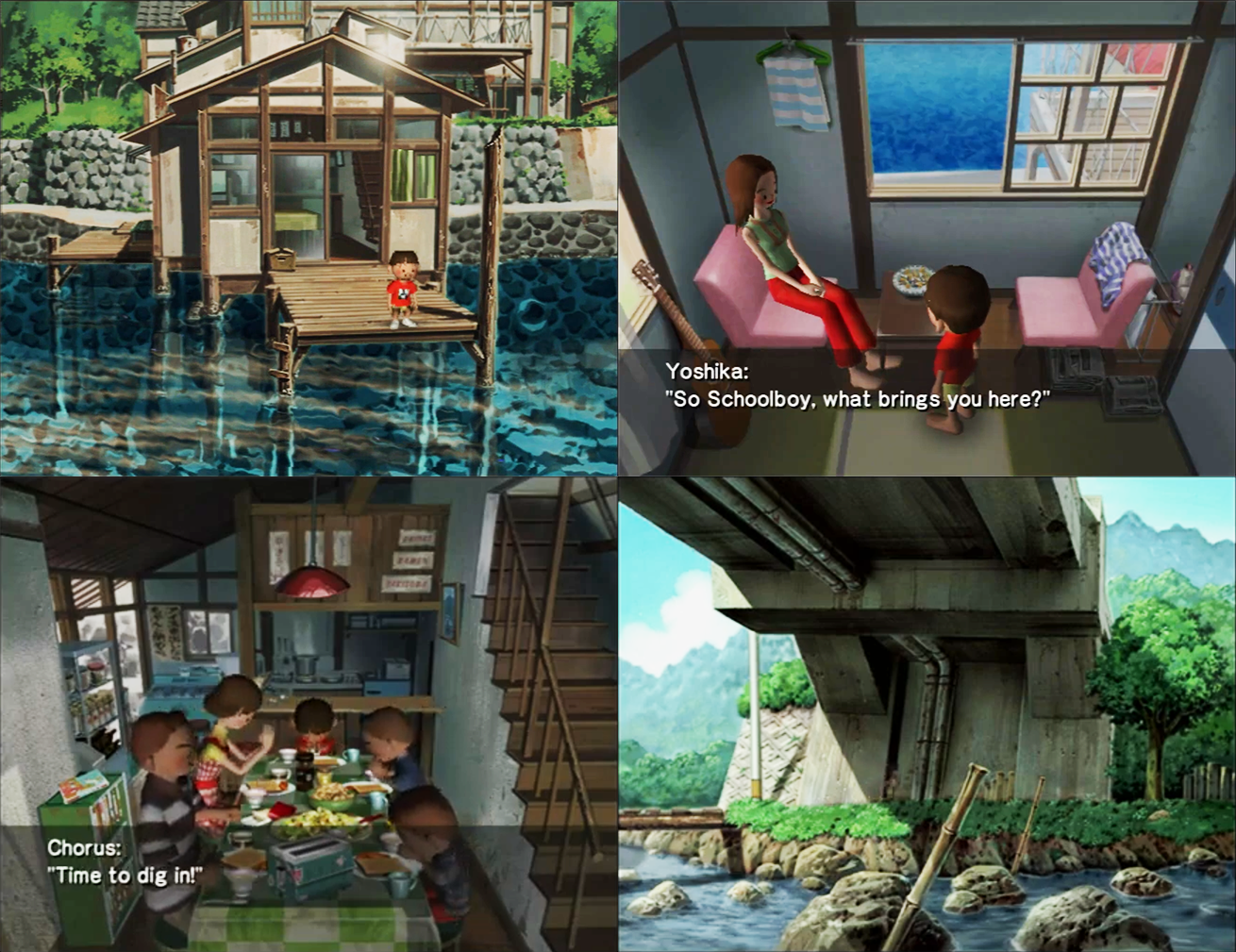
In my August 2025 newsletter, I wrote about my experience playing through Boko No Natsuyasami 2 on the Playstation 2. The game has you play as a kind and curious nine-year-old boy named Boku who spends the month of August 1975 with his relatives in a rural seaside town in southern Japan. Outside attending morning calisthenics (assuming you got to bed on time the night before) and eating meals with your family (your aunt, uncle, and two cousins), your days are unstructured and absent of requirements. After the thirty-one days are up, whether you choose to fish all month or explore every nook and cranny of the town of Fumi, you are sent back home to Tokyo to start the school year and greet your newborn sibling.
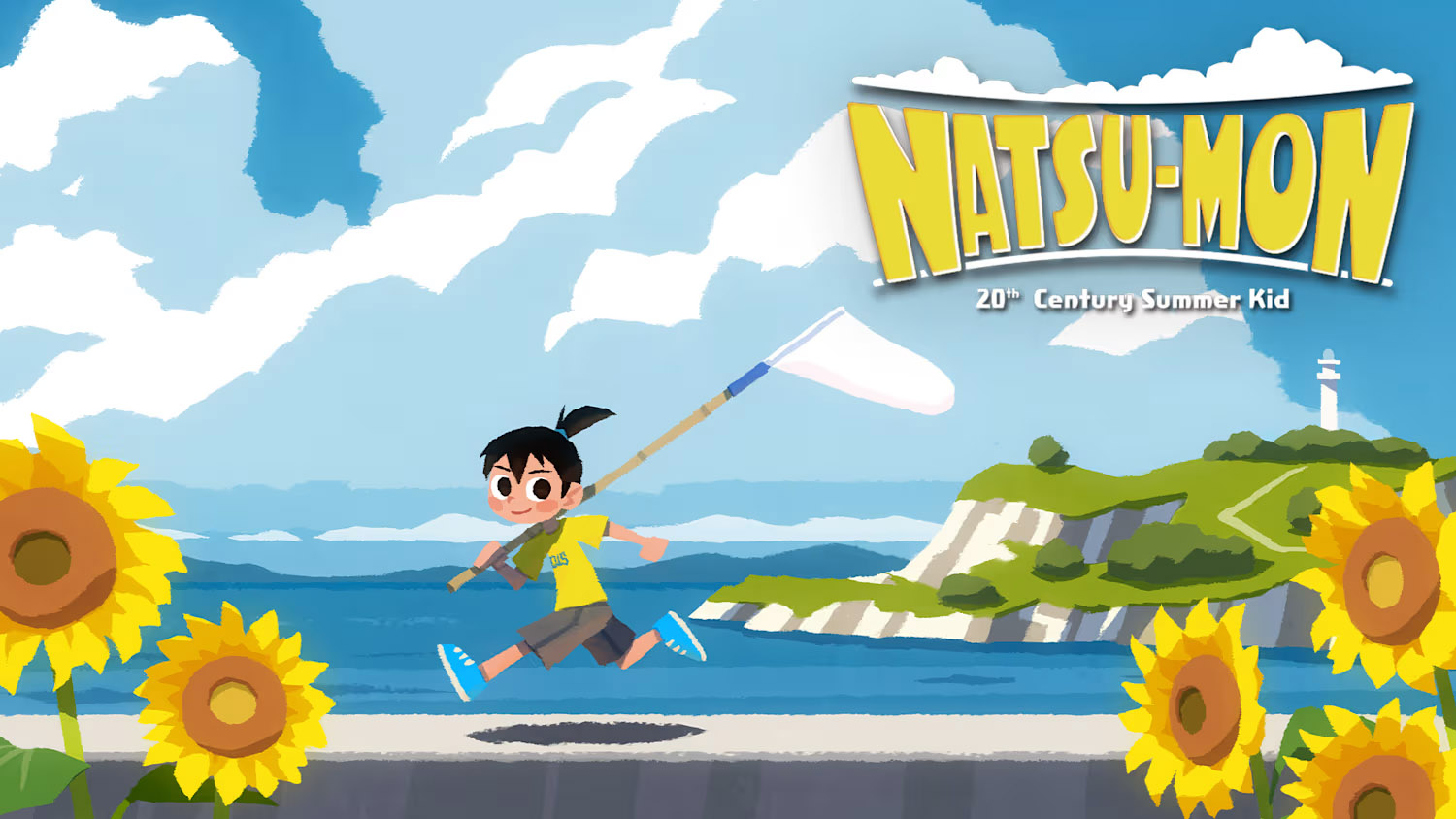
In 2023 the developers of the Boku no Notsuyasami series Millennium Kitchen released a spiritual sequel to the series called Natsu-Mon: 20th Century Summer Kid. Instead of exploring a small rural town in 1975 like in the Boku series (or 1985 in Boku no Notsuyasami 4), the game takes place in 1999. While I haven’t yet played Natsu-Mon, I find it interesting that the studio released a game that packages nostalgia for the late 90’s, a time when the studio was developing the first Boku no Notsuyasami, which itself packages nostalgia for the simpler times of 1975.
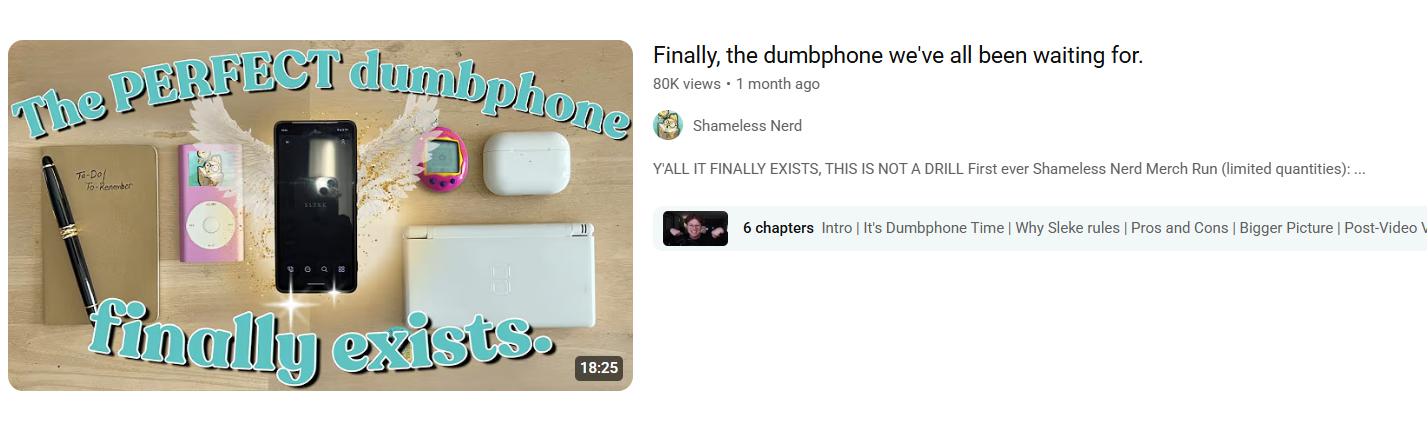
This YouTube videoThis YouTube video's thumbnail felt emblematic of the types of physical media/digital minimalism/single-use gadget content I'm talking about here. If you're curious, in the video Shameless Nerd recommends this modified Pixel 7 for anyone looking for a more modern dumbphone and this flip phone for those who want something that harkens back to the pre-smartphone era.
Although I haven’t yet played Natsu-Mon, I think setting it in 1999 is an interesting choice. While it was more technologically advanced than the 1970’s, it is also a time before the ubiquity of social media, smartphones, and monthly subscriptions for anything and everything. If you search YouTube for the phrases ‘dumb phone’ or ‘physical media,’ you will find a barrage of videos by 20-somethings committing themselves to a simpler and more disconnected life, engaging gadgetry of the 1990’s and 2000’s. Why pay a monthly subscription of HBO Max (currently $10.99/month with ads) to watch Friends on demand when you can buy a used complete series box set for $45? Why not kick your TikTok addiction by buying a dumb phone that literally can’t run the app? Isn’t it more mindful and tactile to use your record player than listen to your favorite artist on Spotify?
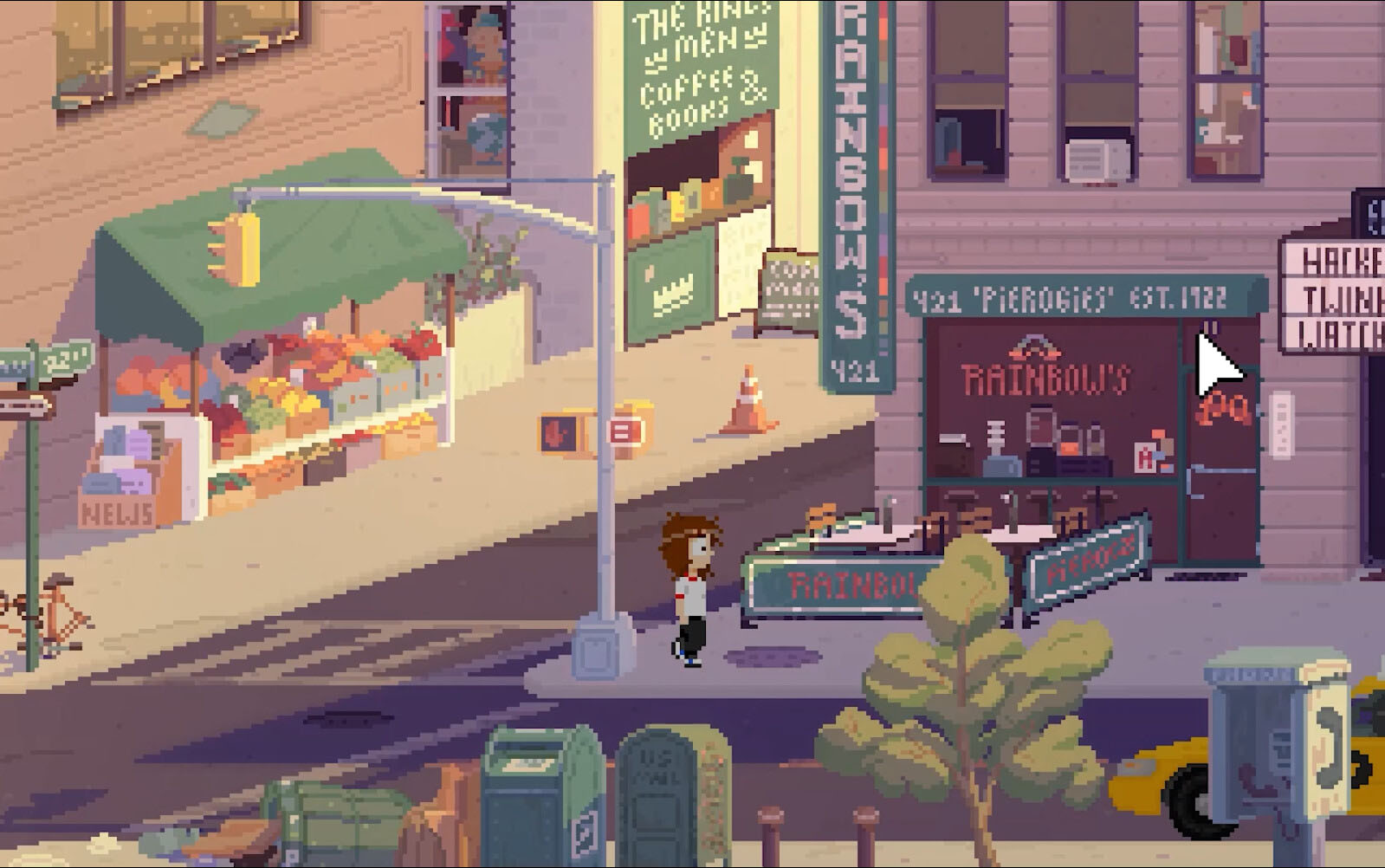
Last week Chris Plante (co-founder of Polygon) released an interview with game developer and comic artist Meredith Gran about her new game Perfect Tides: Station to Station, a narrative point-and-click adventure game about Mara, a young woman attending college in New York in the mid-2000s. The game is a work of fiction but is inspired by Gran’s own life and her own experiences attending college in New York in the mid-2000s. In the interview Gran explores her perspective on timeliness and borrowed nostalgia…
One of the anxieties that Mara deals with is this idea that, like, all the things that happened in the city already happened and the things that are happening now are like a pitiful shadow of that. And I think a lot of the time people come to New York with that sense that they already missed it and then ten years go by and somebody else has the sense that they’ve missed what that person had. So I think capturing the now as I remember it is kind of helping me assign value to that experience that I had, that, you know, I wasn’t living under the bowery in the seventies but it was still pretty amazing and worth remembering.
Boku no Notsuyasami and Perfect Tides: Station to Station aren’t the only games set in past versions of real-world physical spaces, and I do hope more developers revisit their lives and memories in this way (see also the recent titles Despelote and Consume Me). Video games offer the player immersion and intractability that is wholly different from a film or a novel. Untethered by linearity, they can act as intimately curated digital museums or experiential memoirs. It makes me excited for the future of games and all the places and times left to see.
I hope you enjoyed this month’s newsletter! Next month I’ll be back with some more in-depth updates on Sad Land. Until then, stay warm and stay safe.
Sincerely,
Neil
Sincerely,
Neil